Face Masks: How To Choose The Right One For Your Skin
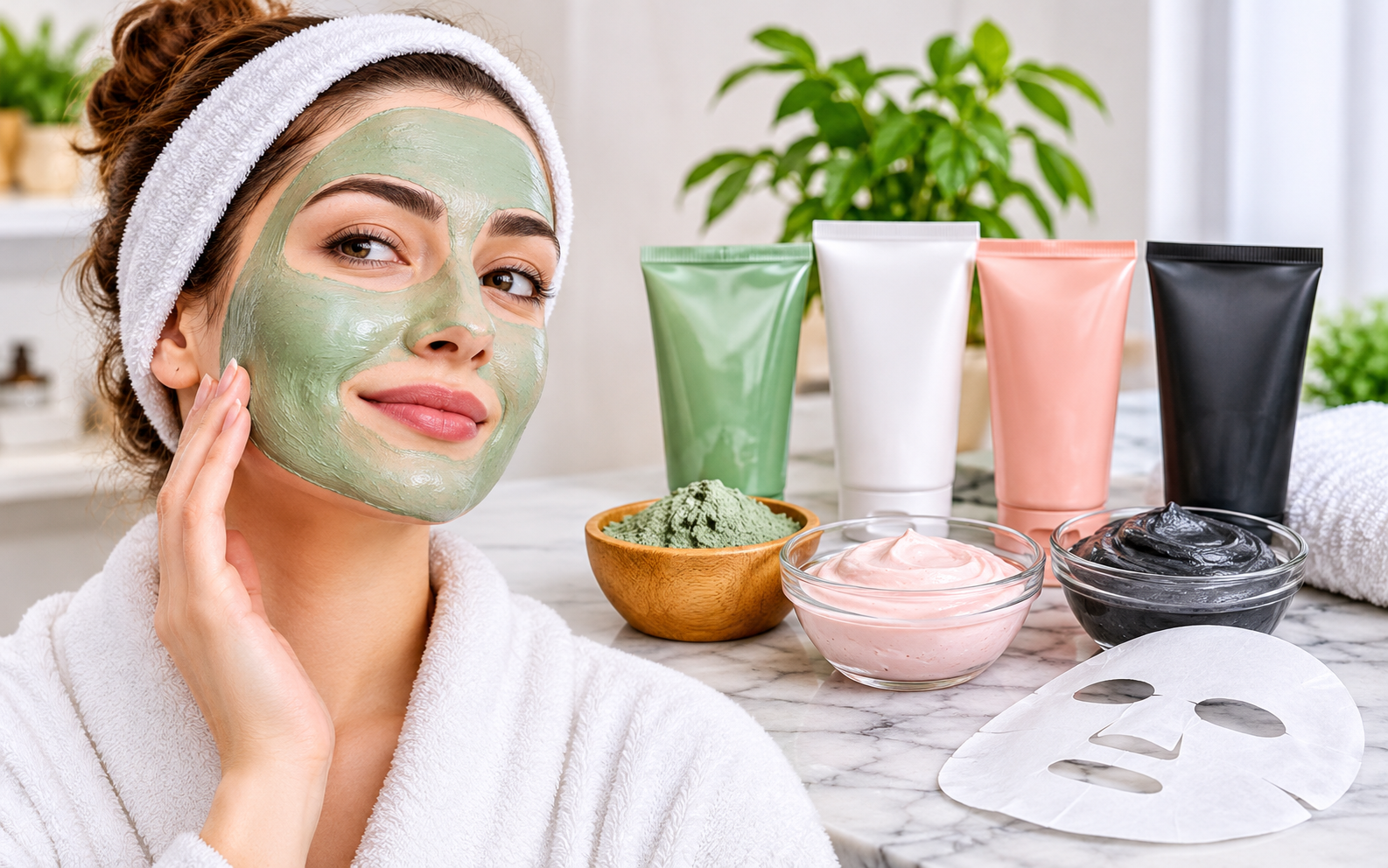
A good mask can hydrate, calm, or clear your skin in minutes. A wrong one can leave it dry, red, or oily. The right choice depends on your skin type and the season. This guide explains the main types of face masks, who each one suits, and how often to use them.
Do Face Masks Actually Work?
Yes, for short term benefits. A mask delivers a concentrated dose of ingredients, so it can hydrate dry skin, soothe irritation, or soak up extra oil. However, it does not replace your daily routine. Think of it as a weekly treat on top of cleanser, moisturizer, and sunscreen.
Types Of Face Masks And Who They Suit
Each type works differently, so match it to your skin first.
-
Cream masks: Rich and moisturizing. They suit dry or sensitive skin, and formulas with hyaluronic acid are great for very dry skin
-
Gel masks: Light and cooling. Many contain cucumber or aloe vera, so they calm sensitive skin and also work for oily to normal skin
-
Clay masks: They absorb excess oil. They suit oily, combination, and breakout prone skin, but they can feel drying on dry skin
-
Sheet masks: Soaked in serum and easy to use. Formulas vary, so read the label. If you love them, see our guide to Korean facial products
-
Overnight masks: You leave them on while you sleep. They work like a thick moisturizer, which makes them useful in winter
-
Exfoliating masks: They use acids or enzymes to smooth the surface. Use them once a week at most, and skip them if your skin is irritated
How To Choose By Skin Type
Dry skin. Pick a cream or overnight mask with hyaluronic acid or ceramides. Our winter skincare routine shows where it fits.
Oily skin. A clay mask once a week helps control shine. For more picks, see our list of skincare products for oily skin.
Combination skin. Try multimasking. Use clay on your T zone and a cream mask on your cheeks.
Sensitive skin. Choose a fragrance free gel or cream mask. Because sensitive skin reacts easily, stick to once a week and patch test first on your jaw or inner arm.
Winter skin. Cold air dries skin out, so swap strong clay masks for hydrating ones until spring.
How To Use A Face Mask
-
Cleanse your face and pat it dry
-
Apply a thin, even layer, and avoid your eyes and lips
-
Leave it on for the time on the label. Cream and gel masks usually need about five to ten minutes
-
Rinse with lukewarm water, or pat in any leftover serum from a sheet mask
-
Finish with serum and moisturizer, following the right skincare routine order
How Often Should You Use Face Masks?
Start with once a week. According to Healthline, gentle cream and gel masks can be used more often, but people with sensitive skin may want to stay with weekly use. Sheet masks are often fine several times a week if the label allows it.
More is not better. Skincare brand Eminence points out that overusing face masks can strip your skin’s natural oils and upset its pH balance. If your skin feels tight afterward, cut back.
Common Face Mask Mistakes
First, many people leave a clay mask on too long. Follow the label, because a clay mask that dries completely can pull moisture from your skin.
Second, some people stack two strong masks on the same night. Instead, pick one that fits your main concern.
Also, do not mask on irritated or damaged skin. If it stings, tightens, or flakes, read our guide to skin barrier repair first.
Finally, do not skip moisturizer afterward. A mask does not replace it.
When To Stop Using A Mask
If a mask causes breakouts, redness, or itching, stop using it right away. See a dermatologist if the reaction does not settle. Also, if you want to exfoliate too, a gentle exfoliator for dry sensitive skin is safer than stacking acids.
Final Verdict
The best face masks are the ones that match your skin, not the ones that trend online. Choose cream or overnight masks for dry skin, gel for sensitive skin, and clay for oily skin. Start with one mask a week, watch how your skin responds, and adjust from there.
FAQs
Q1. Can I use face masks every day?
Ans. Only gentle sheet, cream, or gel masks, and only if the label allows it. Clay and exfoliating masks are better once a week.
Q2. Should I use a face mask before or after serum?
Ans. Use it after cleansing. Then apply serum and moisturizer once you rinse off or pat in the mask.
Q3. Do I need to rinse off a sheet mask?
Ans. Usually no. Remove the sheet and pat in the leftover serum, but check the product label first.
Q4. How do I patch test a new face mask?
Ans. Apply a small amount on your jaw or inner arm. Wait 24 hours, and use it on your face only if there is no redness or itching.
Share:

Stephanie Moore
Stephanie Moore is a Content Editor at Woman With Us with 5+ years of experience in fashion, beauty, and lifestyle content. She edits and refines blogs to make them clear, engaging, and helpful for readers.
Reviews
No reviews yet!