Sun Care For Sensitive Skin: A Simple Guide To Safe Protection
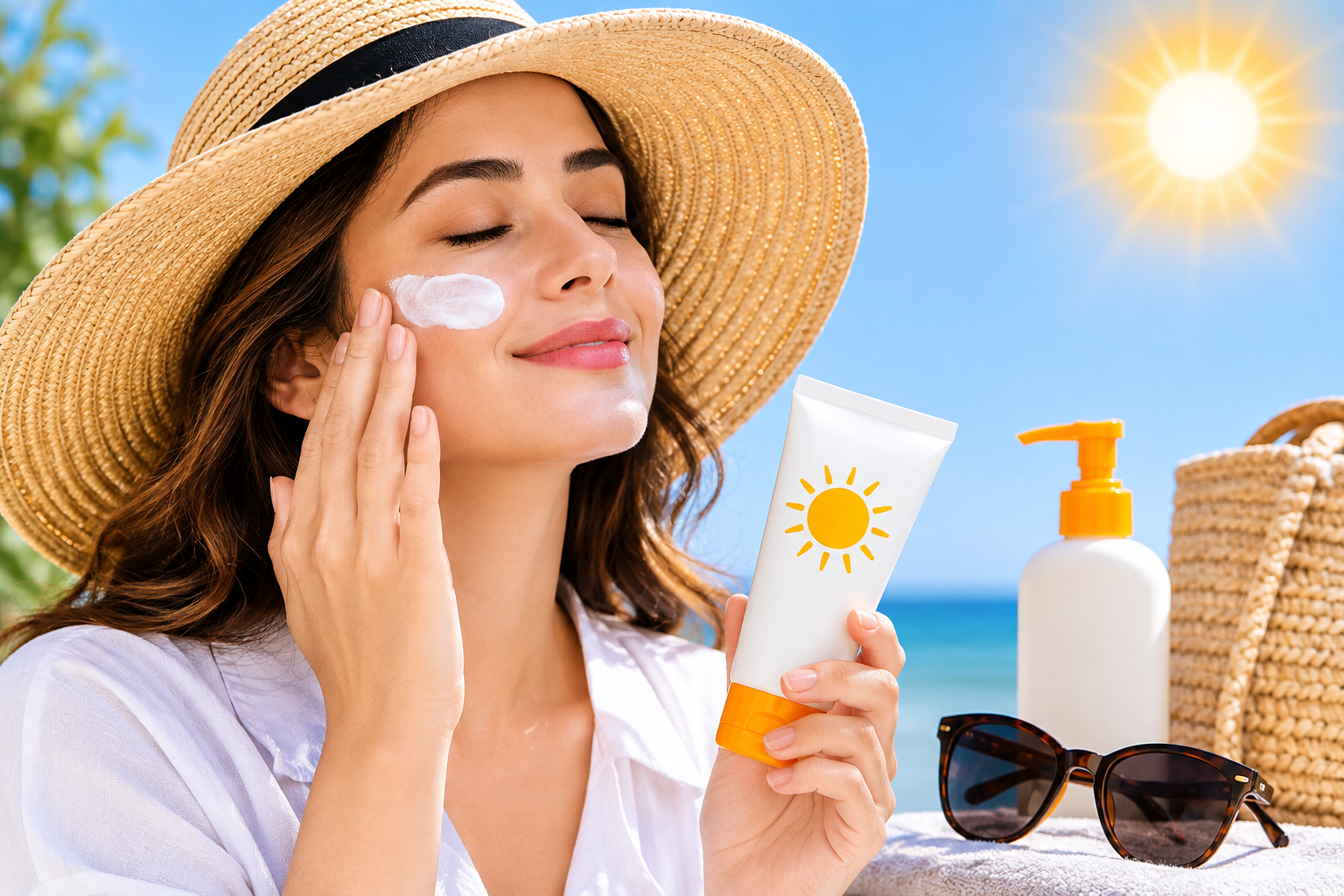
If your skin stings or turns red easily, sunscreen can feel risky. But skipping it is not the answer. Smart sun care for sensitive skin means choosing the right formula, testing it first, and using it the right way. This guide shows you how.
Why Sun Care Matters For Sensitive Skin
UV rays can make redness, dark spots, and irritation worse. They also weaken the skin barrier over time. That is why protection matters even more when your skin is already reactive.
The good news is that you do not need many products. You need one gentle sunscreen and a few smart habits.
Mineral Or Chemical Sunscreen?
Mineral sunscreens use zinc oxide or titanium dioxide. Dermatologist Dr. Blair Murphy-Rose explains that these ingredients provide a physical shield between your skin and the sun. Because they sit on top of the skin, they are less likely to cause irritation.
Chemical sunscreens absorb UV rays instead. They use filters such as oxybenzone and avobenzone, which can trigger reactions in some people.
Mineral formulas have small drawbacks. Some leave a white cast, and some can feel drying. A tinted mineral sunscreen can help with the cast, and a moisturizer underneath helps with dryness.
What To Look For
The American Academy of Dermatology gives clear advice in its guide to choosing the right sunscreen. For sensitive skin, use these checks:
-
A label that says “sensitive skin”
-
Zinc oxide and titanium dioxide as the only active ingredients, especially if your skin stings or you have rosacea
-
Broad spectrum protection and SPF 30 or higher
-
Water resistance if you sweat or swim
-
A fragrance free formula
Note the difference between “unscented” and “fragrance free.” Unscented products can still contain masking fragrance. Fragrance free means no fragrance was added at all.
If you break out easily, choose a lightweight, noncomedogenic formula.
What To Avoid
The AAD advises people with sensitive skin to avoid sunscreens with fragrance, parabens, and oxybenzone. Also skip formulas with added essential oils, since they can irritate reactive skin.
How To Patch Test A New Sunscreen
Always test before you apply sunscreen all over your face.
-
Apply a small amount on your inner arm or wrist
-
Leave it on for 24 to 48 hours without washing the spot
-
Check for redness, itching, or bumps
-
If the spot stays calm, try a small amount on your jaw
-
If it stays calm again, use it on your whole face
If you cannot find what triggers your skin, a dermatologist can run an allergy patch test in the office.
How To Apply Sunscreen Properly
Most people use too little. Apply a generous layer to your face, neck, and ears.
In your morning routine, sunscreen goes last, after your moisturizer. See our guide to the skincare routine order for the full sequence. Reapply every two hours when you are outdoors, and after sweating or swimming.
Sun Care Beyond Sunscreen
Sunscreen works best with other protection. This also helps if your skin reacts to some formulas.
-
Wear a wide brim hat and sunglasses
-
Choose clothing with UPF protection
-
Sit in the shade during midday hours
-
Cover up on long outdoor days
Sun Care In Winter And On Cloudy Days
UV rays reach your skin on cloudy and cold days too. So keep sunscreen in your daily routine all year. Our winter skincare routine shows where it fits. Sunscreen also supports skin health long term, so it pairs well with an anti aging moisturizer.
How To Remove Sunscreen Gently
Use a mild, fragrance free cleanser at night. If you wear water resistant sunscreen or makeup, a gentle remover helps. See our pick of the best makeup remover for sensitive skin and eyes. If your skin stings after cleansing, our guide to skin barrier repair can help.
Common Mistakes To Avoid
First, many people skip the patch test. However, even a mild product can cause trouble on reactive skin.
Second, some buy “unscented” products and assume they are safe. Instead, check the ingredient list for fragrance.
Finally, do not use an expired sunscreen. Check the date, and replace it when it looks or smells different.
When To See A Dermatologist
See a dermatologist if sunscreen causes a rash, burning, or swelling, or if your reaction does not settle after you stop using it. A doctor can also help if you have rosacea or eczema.
Final Verdict
The best sun care for sensitive skin is simple. Choose a fragrance free mineral sunscreen with SPF 30 or higher, patch test it, and apply it every day. Add shade, a hat, and sunglasses, and your skin stays protected without the reaction.
FAQs
Q1. Can I use baby sunscreen on sensitive skin?
Ans. Often yes. Many children’s sunscreens use only zinc oxide and titanium dioxide, but check that the formula is fragrance free.
Q2. Does sunscreen cause breakouts?
Ans. Heavy formulas can. Choose a lightweight, noncomedogenic sunscreen if you break out easily.
Q3. How do I reduce a white cast?
Ans. Use a tinted mineral sunscreen. Apply thin layers and blend well.
Q4. Do I need sunscreen indoors?
Ans. If you sit near a window for long hours, yes. UV rays can pass through glass and reach your skin.
Share:

Stephanie Moore
Stephanie Moore is a Content Editor at Woman With Us with 5+ years of experience in fashion, beauty, and lifestyle content. She edits and refines blogs to make them clear, engaging, and helpful for readers.
Reviews
No reviews yet!