Facial Oil For Gua Sha: How To Choose The Right One
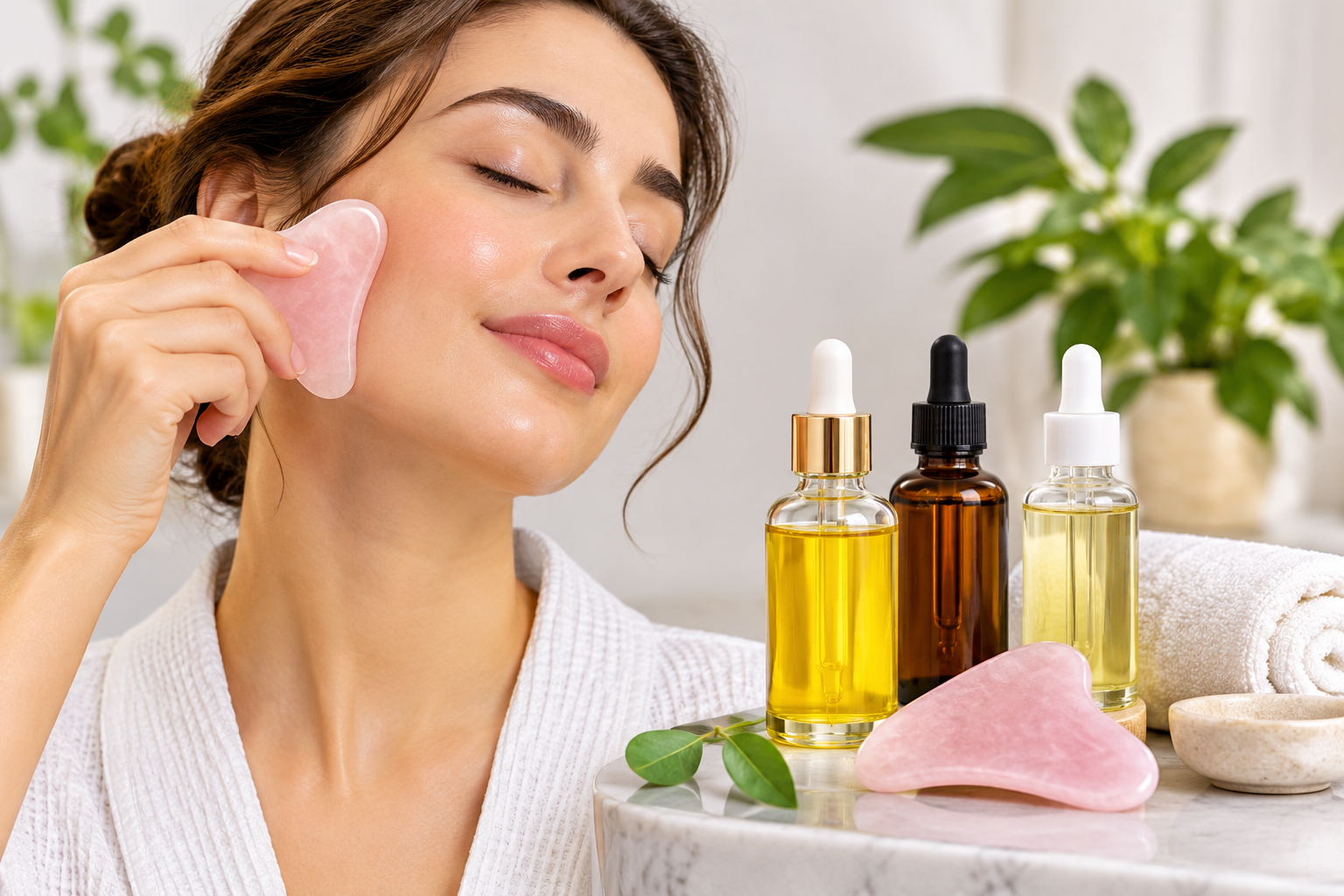
A gua sha tool should glide over your skin, not drag it. The right oil makes that happen. The wrong one feels sticky, clogs pores, or sinks in too fast. This guide explains how to pick the best facial oil for gua sha, which oils suit each skin type, and how to use them safely.
Why You Need Facial Oil For Gua Sha
Gua sha works by pressing and gliding a smooth tool across your face. Without slip, the tool tugs on thin facial skin and causes irritation. Celebrity esthetician Mimi Luzon explains that using face oil before you massage lets the tool glide easily and prevents pulling.
Oil also adds moisture while you massage. A serum is usually not enough, because most serums absorb too fast. You need something with lasting glide.
What Makes A Good Facial Oil For Gua Sha?
Look for these qualities on the label and in the texture:
-
Slow absorption: The oil should keep gliding for the whole massage
-
Lightweight feel: It should not feel sticky or greasy
-
Non clogging formula: Look for oils labeled non comedogenic
-
Barrier support: Oils with squalane, jojoba, or linoleic acid are common choices
-
Low fragrance: Strong scents can irritate your face
A fancy “gua sha oil” label is not required. A simple face oil with the right texture works just as well.
Best Oils By Skin Type
No single oil suits every skin type, so match the oil to your skin.
-
Dry skin: Rosehip, argan, or jojoba oil. They add richness without feeling heavy
-
Oily or combination skin: Squalane or grapeseed oil. They are light and absorb cleanly
-
Acne prone skin: Squalane or grapeseed oil, used in small amounts
-
Sensitive skin: Jojoba or squalane, with no added fragrance
-
Mature skin: Rosehip or argan oil for extra nourishment
If you have a nut allergy, check the label for almond or argan oil before you buy.
What To Avoid
Some oils make gua sha harder or less comfortable. Skip these:
-
Oils that sink in within seconds, since the tool will start to drag
-
Sticky or very thick formulas
-
Heavily scented blends and essential oils
-
Body oils and cooking oils, which are not made for the face
Also, if your skin feels tight or irritated, fix your barrier first. Our guide to skin barrier repair shows how.
How To Use Facial Oil With Gua Sha
-
Wash your face and hands so the tool glides over clean skin
-
Warm a few drops of oil between your palms
-
Press the oil onto your face and neck
-
Hold the tool at a low angle and use light pressure
-
Stroke upward and outward, about five times per area
-
Add a drop more oil if the tool starts to drag
-
Wash the tool with mild soap afterward
A full session takes about five to ten minutes. If your skin still feels dry after, press in a moisturizer. See our skincare routine order to place each step correctly.
How Often Should You Do Gua Sha?
A few times a week is plenty. Evening works well because oil sits comfortably on your skin overnight. More is not better, so stop if you notice redness or soreness.
In winter, a gentle oil can also help dry skin. Pair it with our winter skincare routine for best results.
Who Should Skip Gua Sha?
Gua sha is generally safe. However, board certified dermatologist Dr. Chacon advises checking with a dermatologist first if you have active acne, rosacea, or other sensitive skin conditions, because the massage may make them worse.
What Results Can You Expect?
Be realistic. Dermatologist Dr. Michelle Henry says gua sha can boost circulation and lymphatic flow, which may reduce puffiness. That means a short term, de-puffed look. Claims about collagen and long term lifting are less certain, so treat gua sha as a relaxing ritual, not a replacement for sunscreen and moisturizer.
Smart Buying Tips
Before you buy, follow these simple rules:
-
Start with a small bottle so you can test the texture
-
Read the ingredient list for fragrance
-
Compare price per ml, since oil bottles vary a lot in size
-
Patch test on your jaw first
-
Wait for sales. Our guide to Black Friday beauty deals shows what is worth buying
If you have oily skin, our list of skincare products for oily skin can help you pick lighter textures.
Final Verdict
The best facial oil for gua sha is lightweight, slow to absorb, and fragrance free. Choose squalane or grapeseed for oily skin, and rosehip, argan, or jojoba for dry skin. Start small, test first, and keep your sessions short.
FAQs
Q1. Can I use a serum instead of oil for gua sha?
Ans. Not ideal. Most serums absorb quickly, so the tool starts to drag. A face oil or massage balm gives better glide.
Q2. Do I need oil if I have oily skin?
Ans. Yes. You still need slip, so choose a light oil like squalane and use only a few drops.
Q3. Can I use body oil or cooking oil for gua sha?
Ans. It is best to avoid them. They are not made for the face and may clog pores or irritate your skin.
Q4. Should I apply moisturizer after gua sha?
Ans. If your skin still feels dry, yes. In the morning, finish with sunscreen.
Share:

Stephanie Moore
Stephanie Moore is a Content Editor at Woman With Us with 5+ years of experience in fashion, beauty, and lifestyle content. She edits and refines blogs to make them clear, engaging, and helpful for readers.
Reviews
No reviews yet!