Setting Powders For Oily Skin That Actually Last All Day
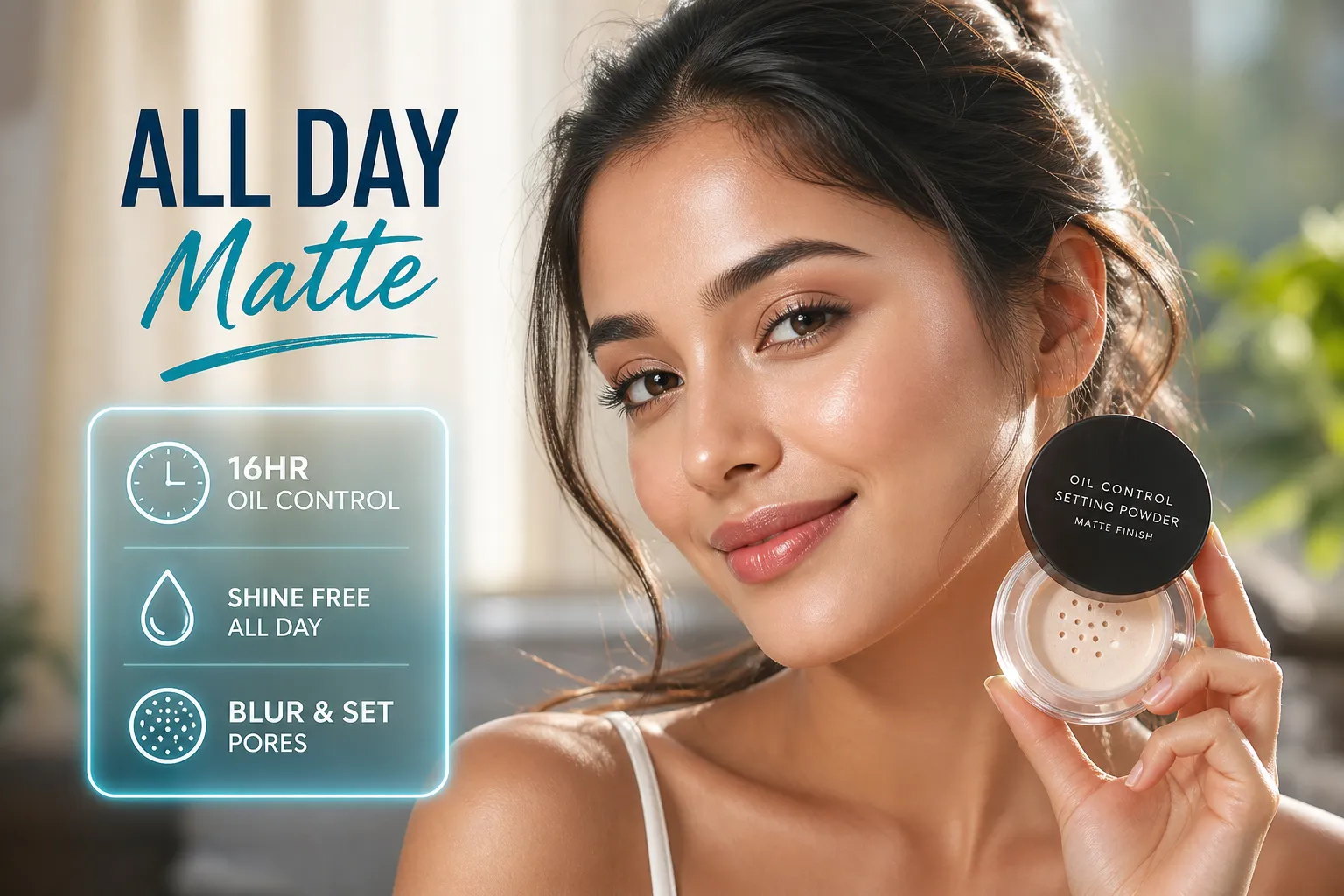
If you're asking what is the best setting powder for oily skin that lasts all day, here's the short answer: a silica-rich loose powder applied with a puff and finished with a matte setting spray. The longer answer depends on your budget and what you're asking the powder to do, and that's exactly what this guide covers.
You set your makeup at 8 a.m. By noon, your T-zone looks like a glazed donut. You used a setting powder, so what went wrong? The frustrating reality is that many setting powder recommendations are written for average skin, not oily skin. A powder that earns rave reviews for someone with normal skin might give you two hours of matte before your face is shining through again.
Not all powders are built the same, and the difference between a six-hour matte and a two-hour one comes down to specific ingredients, powder format, and how you apply it. At Woman With Us, we put a curated selection of drugstore and mid-range setting powders through a full 8-hour editorial wear test to find out which ones genuinely control oil and which ones just delay the inevitable. This is that guide.
What Is The Best Setting Powder For Oily Skin That Lasts All Day?
The right pick depends on budget and priority, but the formula rules stay the same regardless of price. Silica-dominant, finely milled loose powders consistently outperform other formats for all-day oil control. Below, we break down exactly why, then match those criteria to tested picks at every price point.
What Actually Makes A Setting Powder Work For Oily Skin
The Ingredients That Absorb Oil And Extend Wear
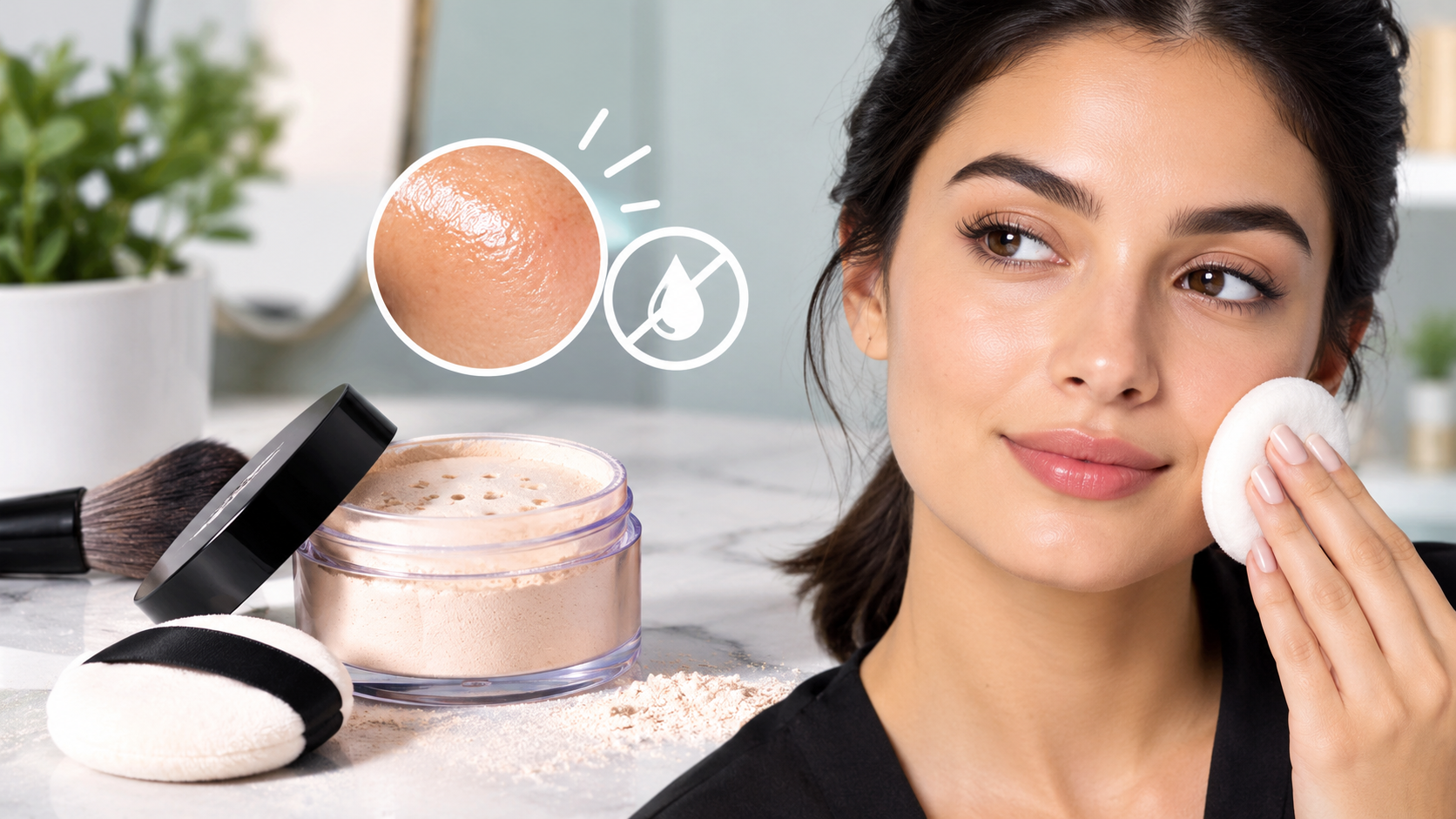
Before you spend a dollar, check the ingredient list. Silica is the top performer for oil absorption because its porous microspheres pull sebum into the particle rather than just sitting on top of it. Silica also creates the soft-focus, pore-blurring effect that makes skin look airbrushed without flashback. Look for it near the top of the ingredient list as a reliable green flag.
Kaolin clay is an effective, gentler absorber often paired with silica to target heavier sebum. It works well as a supporting ingredient rather than a standalone star. Rice starch is lightweight and effective, controlling shine without the heavy or chalky look that some powders leave behind.
The best formulas combine two or more of these rather than relying on a single absorber. A silica-plus-kaolin or silica-plus-rice-starch combination consistently outperforms single-ingredient formulas in wear tests. Cornstarch and talc also appear in effective powders and can contribute to multi-hour oil control, depending on how the full formula is balanced.
Loose Powder vs. Pressed Powder: The Honest Answer
Loose powders generally outperform pressed for initial oil control. Because they are less compressed, they can be applied more generously and deliver more free powder to actively absorb sebum throughout the day. Pressed powders are a better fit as a touch-up tool in your bag because of their portability, not as a full-face setter first thing in the morning.
The roundup below covers both formats. Knowing which one to reach for at which stage of your routine will make every product on this list perform better for you.
How The Woman With Us 8-Hour Wear Test Worked

The Testing Criteria
Every powder was evaluated at the 2-, 4-, and 8-hour marks for oil breakthrough on the T-zone, cheeks, and chin. Transfer resistance was tested by pressing a white cloth against the face at each checkpoint. Flashback was checked in both natural light and flash photography because a powder that looks flawless in person but blows out completely in photos is a real-life problem. All testing was done on oily skin in a warm indoor environment to reflect actual wearing conditions, not a climate-controlled lab setting. Results are editorial observations based on consistent methodology applied to each product.
What The Before-And-After Results Revealed
Powders with silica as the first or second ingredient consistently outlasted the rest past the four-hour mark. Several powders marketed as "translucent" caused visible flashback under flash photography, particularly formulas with a stark white or lavender base. A few drugstore picks performed on par with mid-range formulas for oil control, which is the most useful finding in this entire roundup: price does not reliably predict oil-control performance. Application method and formula ingredients do.
Best Drugstore Setting Powders For Oily Skin
These picks are available at Target, Ulta, and Walmart. They were wear-tested using the same criteria as every other powder in this roundup.
Maybelline Fit Me Loose Setting Powder
This one held shine back for 7 to 8 hours in testing, which is impressive for a drugstore price point. The finely milled silica formula gives a soft finish without looking flat or powdery, and the shade range is broad enough to work across multiple undertones rather than defaulting to one universal shade that pulls ashy on half the people who try it. When applied with a light hand, it is less prone to flashback in photos, though if you're concerned, it's worth testing on camera before an event. If budget is your first filter, this is the pick.
L'Oréal Paris Infallible Pro Sweep And Lock Loose Powder
The micro-fine formula here is silica-heavy, and it shows in wear performance. Oil control longevity is strong for the price, and this powder works especially well as the base layer before a matte setting spray. It has earned consistent top-pick status across independent beauty roundups, and our wear results backed that up. Apply it with a puff, let it sit, and follow with a single mist of matte setting spray for noticeably extended wear.
Best Mid-Range Picks That Deliver Without The Splurge

Laura Mercier Translucent Loose Longwear Setting Powder
This is the most consistently recommended setting powder for oily skin across independent editor tests, and our testing confirms it earns that reputation. The texture is fine enough to layer without looking heavy or cakey, and the longwear formula holds up past the six-hour mark on genuinely oily skin. One important shade note: the standard translucent shade works well for fair to medium complexions. For medium to deeper skin tones, Laura Mercier offers options such as Translucent Medium Deep and Translucent Honey that are worth considering over the standard translucent, which can pull ashy on darker complexions. For flashback, the formula performs well when applied with a light hand.
Fenty Beauty Invisimatte And ONE/SIZE Ultimate Blurring Powder
These two serve different needs, so the right pick depends on what you are actually asking from your powder. ONE/SIZE is the longest-wear option in this roundup. The brand's claim is up to 24 hours of shine control; real-world oily-skin results held past the 8-hour mark in testing. A consumer study of 31 participants found that 97% said the powder improved makeup longevity, and 94% said it blurred pores visibly. For the reader who wants maximum all-day matte, ONE/SIZE is a strong top contender.
Fenty Beauty Invisimatte is a pressed powder, which makes it the stronger choice as a dual-purpose product: initial setting and midday touch-ups in one compact. It is portable, it controls shine effectively, and it does not disturb the makeup already on your face when you press it on mid-afternoon. For one powder that handles both morning set and lunch touch-up, Fenty is a smart pick. For the longest possible single-application wear, ONE/SIZE is the better investment.
Application Techniques That Stretch Your Powder's Wear Time
Puff Over Brush For Initial Setting
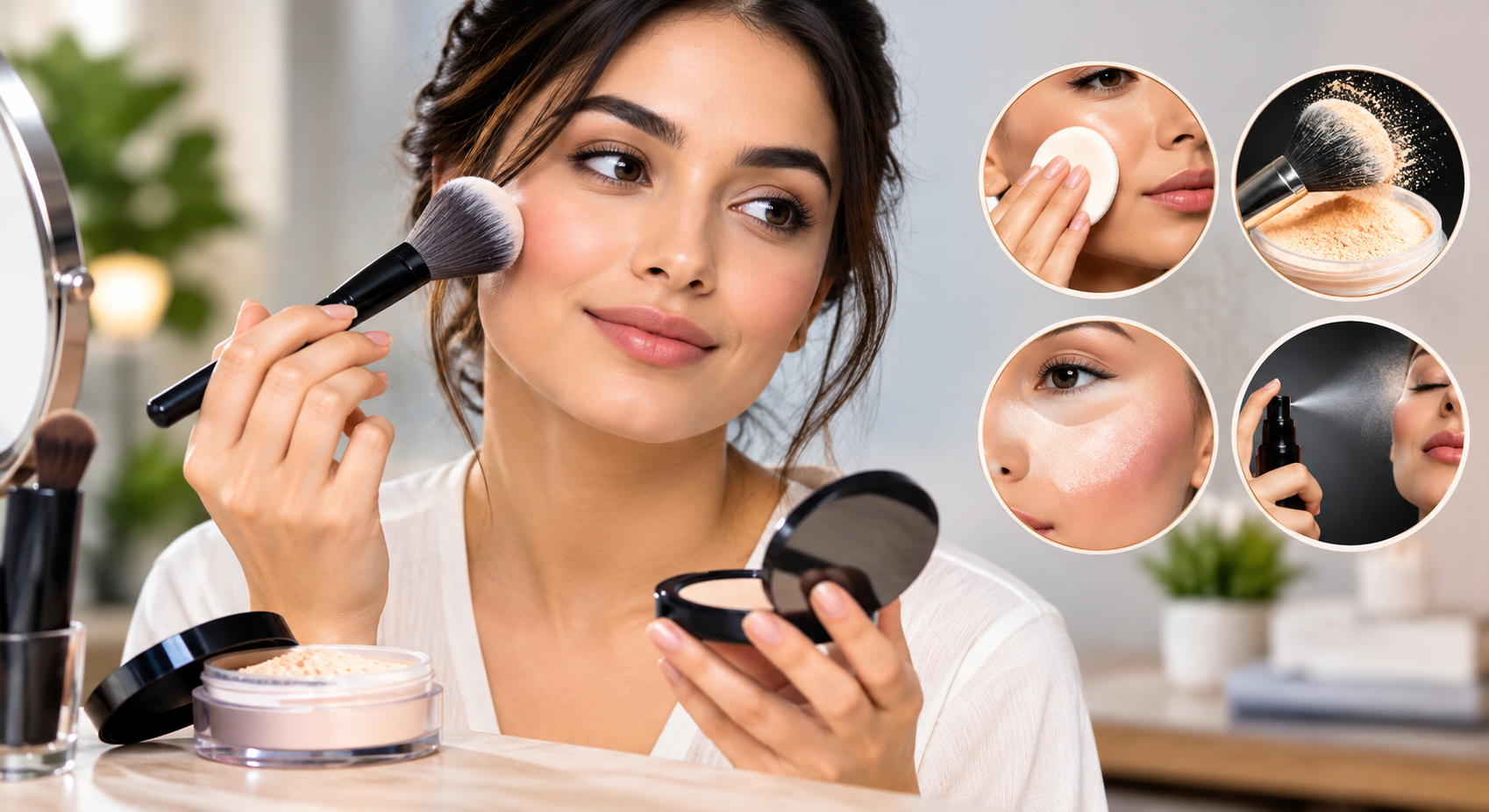
Pressing powder into the skin with a dense puff or flat kabuki brush locks it in more effectively than sweeping it on with a fluffy brush. When you sweep, you are distributing powder on top of your base rather than bonding it to the skin. Pressing pushes the powder into the pores, which is exactly where you need it to sit on oily skin so the oil is absorbed throughout the day rather than just on the surface.
Load a small amount of powder onto your puff, tap off the excess, and then press and dab across the T-zone, nose, chin, and any other high-oil areas. Use a fluffy brush afterward only to dust away any excess and soften edges.
Baking On Oily Zones And Finishing With A Matte Setting Spray
Baking is not just a trend, it is one of the most effective methods for oily skin when used strategically. Apply a slightly heavier layer of powder over the T-zone and the sides of the nose, let it sit for two to three minutes, and then dust away the excess with a fluffy brush. This extra contact time gives the absorbent ingredients more opportunity to work into the skin before you remove the surplus.
After baking, mist your face with a matte setting spray and let it dry completely. Follow with a second, very light dusting of powder. This spray-powder-spray method is the single most effective combination for pushing matte wear past the six-hour mark on very oily skin. The setting spray helps the powder bond to the skin so it is not sitting loosely on top where sebum can displace it.
Shade Selection And Avoiding Flashback
The Translucent Powder Myth And Who It Actually Works For
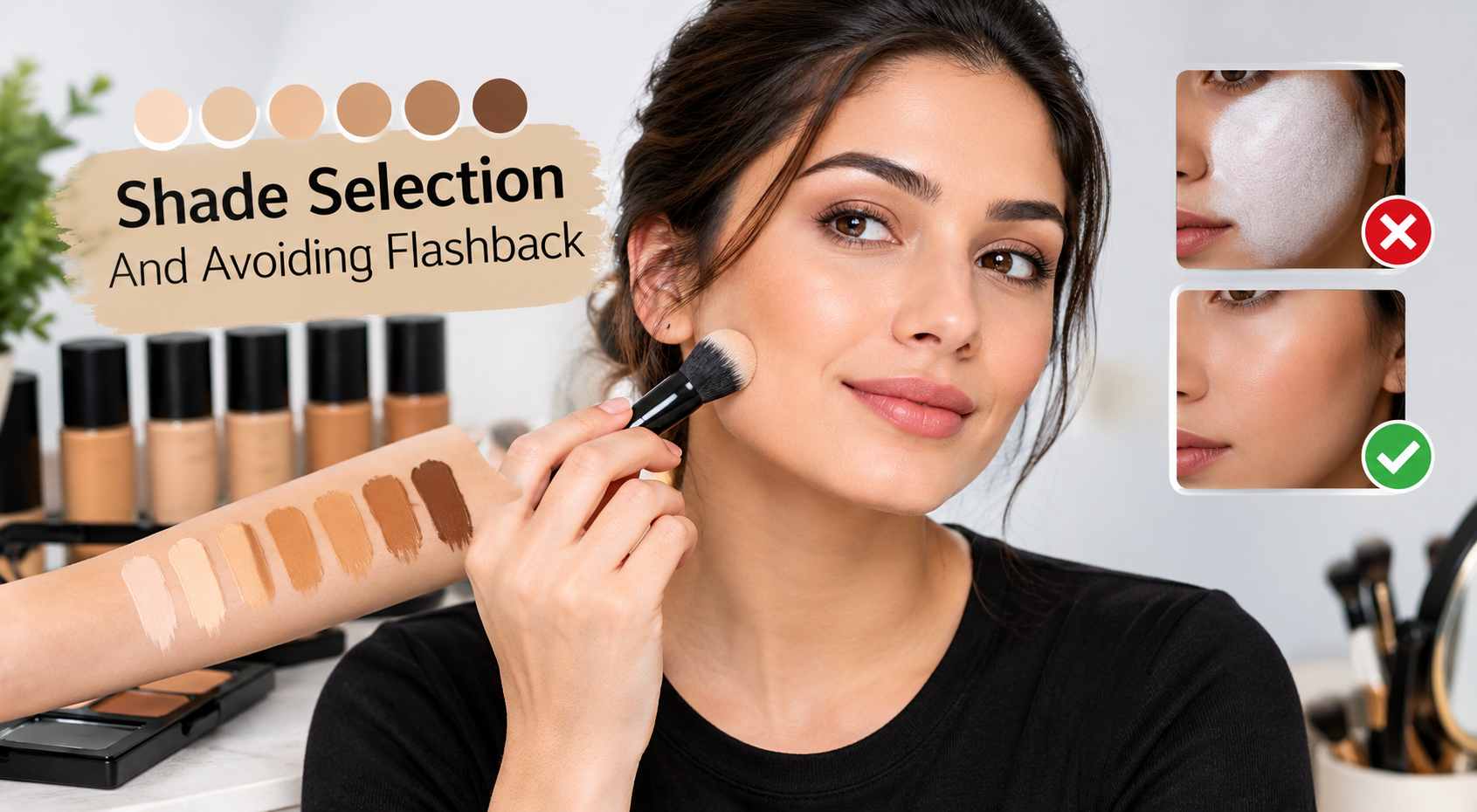
"Translucent" does not mean invisible on every skin tone. Powders with a stark white or lavender base can leave an ashy or gray cast on medium to deep skin tones, and they are more prone to flashback under flash photography because those white-cast minerals bounce light back at the camera. If you have a medium to deep complexion and have had issues with powders pulling gray in photos, the formula's base tone is almost certainly the cause.
Look for yellow-toned or banana-leaning translucent options instead of powders with a cool or white base. Check whether the ingredient list includes heavy white-cast minerals near the top if flashback is a consistent concern. The fix is usually a shade or base tone adjustment, not switching products entirely.
Shade Matching Tips For The Picks In This Roundup
Maybelline Fit Me comes in multiple shades that address undertone differences, so it is worth reviewing the specific options rather than defaulting to the lightest translucent. For medium to deeper skin tones, Laura Mercier's deeper translucent shades are a consistent recommendation across both independent editor tests and real-user reviews. For ONE/SIZE, the formula performs well across skin tones without a strong white-cast risk, though applying with a light hand reduces flashback regardless of shade. Fenty Invisimatte is formulated with a wide shade range in mind, making it one of the safer choices if powders tend to read ashy or chalky on your skin.
The Bottom Line On All-Day Oil Control
There is no single best setting powder for oily skin that lasts all day, the right pick depends on budget and priority. For drugstore budgets, Maybelline Fit Me delivers 7 to 8 hours of genuine shine control without breaking the bank. For a reliable mid-range pick with strong all-day performance and wide shade options, Laura Mercier is the consistent standout. For maximum wear above everything else, ONE/SIZE is the pick.
Ingredients and technique matter as much as the product itself. A $12 powder applied correctly with a puff and followed by a matte setting spray can outperform a $48 powder swept on with a fluffy brush. Getting silica near the top of the ingredient list, pressing rather than sweeping your application, and finishing with the spray-powder-spray method, these are the practical moves that separate a full-day matte from a two-hour delay.
Still Searching For The Best Setting Powder For Oily Skin That Lasts All Day?
Start with the formula, match it to your budget, and apply it right. Woman With Us publishes tested guides across makeup and skincare, bookmark the site for answers backed by real wear results rather than generic lists.
Share:

Stephanie Moore
Stephanie Moore is a Content Editor at Woman With Us with 5+ years of experience in fashion, beauty, and lifestyle content. She edits and refines blogs to make them clear, engaging, and helpful for readers.
Reviews
No reviews yet!