How Do I Stop My Foundation From Caking On Oily Skin?
Cakey foundation on oily skin has a specific, frustrating pattern: it looks fine going on, then a few hours later it's pooling in your pores, sliding off your T-zone, and settling into fine lines you didn't even know you had.The instinct is usually to add more powder to fix it, which almost always makes it worse. Understanding why caking actually happens is the first step toward stopping it, and the fix usually has less to do with the foundation itself and more to do with everything happening before and after it goes on.
What's Actually Happening When Foundation Cakes
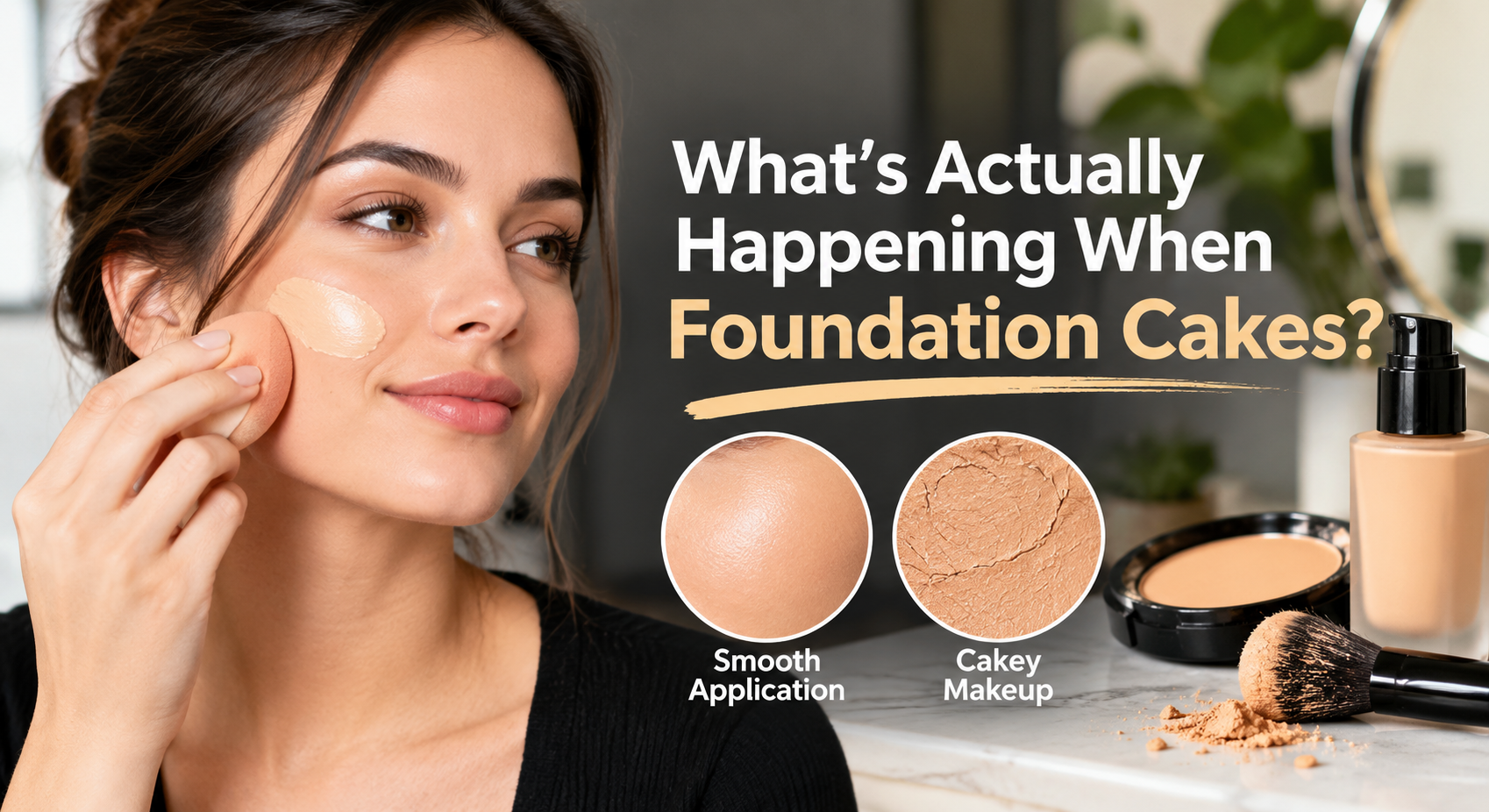
According to a breakdown from Ann Marie Gianni, a cakey finish is rarely about the makeup product alone — it's usually a distress signal from the skin underneath it. For makeup to sit properly, the surface tension of liquid foundation needs to match the surface energy of your skin.When that balance is disrupted, whether by dryness or excess oil, the pigment sits on top of the skin instead of merging into it, highlighting every microscopic peak and valley on the surface rather than smoothing over them.
For oily skin specifically, the mechanism is a little different than it is for dry skin. Excess oil actually breaks down the binding agents in foundation, causing pigment to separate and shift unevenly rather than staying put. That's why oily skin tends to slide and cake by midday rather than looking flaky right out of the gate — it's less about the foundation drying out and more about it being chemically disrupted by your skin's own oil production.
The Real Causes Worth Knowing
A few specific factors show up repeatedly across dermatology and beauty sources as the actual culprits behind cakey foundation on oily skin:
Skipping hydration. It sounds backwards, but even oily skin needs moisture before makeup. As Faces Canada points out, without a properly hydrated base, foundation has no smooth surface to glide across, so it grabs onto texture and dry patches instead of blending evenly — even on skin that's producing plenty of oil.
Using the wrong finish for your skin type. According to Elle, one of the most common mistakes is applying the wrong type of formula for your skin — dewy, glow-focused foundations on oily skin tend to produce the opposite of the intended effect, breaking down and separating faster than a matte or oil-controlling formula would.
Layering incompatible products. Mixing a silicone-based primer with a water-based foundation, or the reverse, creates immediate texture problems, sometimes called "pilling," where the products physically reject each other instead of blending. Faces Canada also notes that over-layering skincare — more than two products underneath foundation — often leads to buildup that keeps the base from gripping evenly.
Environmental humidity and heat. As StyleCraze explains, high humidity increases sweat and oil production, which breaks down foundation faster than it would in a drier climate. Interestingly, indoor heating and air conditioning can cause the same issue from the opposite direction — dry indoor air can trigger oily skin to overcompensate by producing even more oil.
Over-powdering. This is probably the most common self-inflicted cause. Piling on loose or pressed powder to control shine, especially using techniques like "baking" where a thick layer sits on the skin before being dusted off, tends to backfire.Instead of locking makeup in place, that much powder buildup causes foundation to dry out and separate rather than staying smooth.
A Myth Worth Debunking
One persistent myth, according to YSL Beauty, is the idea that using less makeup automatically reduces the risk of caking. It doesn't. Cakey makeup can happen at any coverage level — full glam or "no-makeup makeup" — because the real issue is almost always skin prep and technique, not how much product you're using in total.
Fixing It: Skin Prep Comes First

Cleanse and moisturize properly.Even for oily skin, a lightweight, hydrating moisturizer matters. Skipping it doesn't reduce oil production — it just leaves skin unbalanced, which makes foundation more likely to slide and separate rather than sit evenly through the day. Give moisturizer two to three minutes to fully absorb before moving on to the next step; applying foundation over damp, unabsorbed cream is a common cause of slipping and pilling.
Use a mattifying primer. A properly matched primer does real work before foundation ever touches your skin. Makeup artist Emily Rivero, quoted by Ipsy, recommends a mattifying primer specifically for oily skin to keep oil from mixing directly into the foundation and turning it into a cakey mess by midday.
Match your primer and foundation formulas. Mixing incompatible bases — silicone with water-based, for instance — is a fast track to separation and texture issues.Keeping primer and foundation in the same formula family (both silicone-based, or both water-based) generally produces a smoother, longer-lasting result.
Fixing It: Application Technique
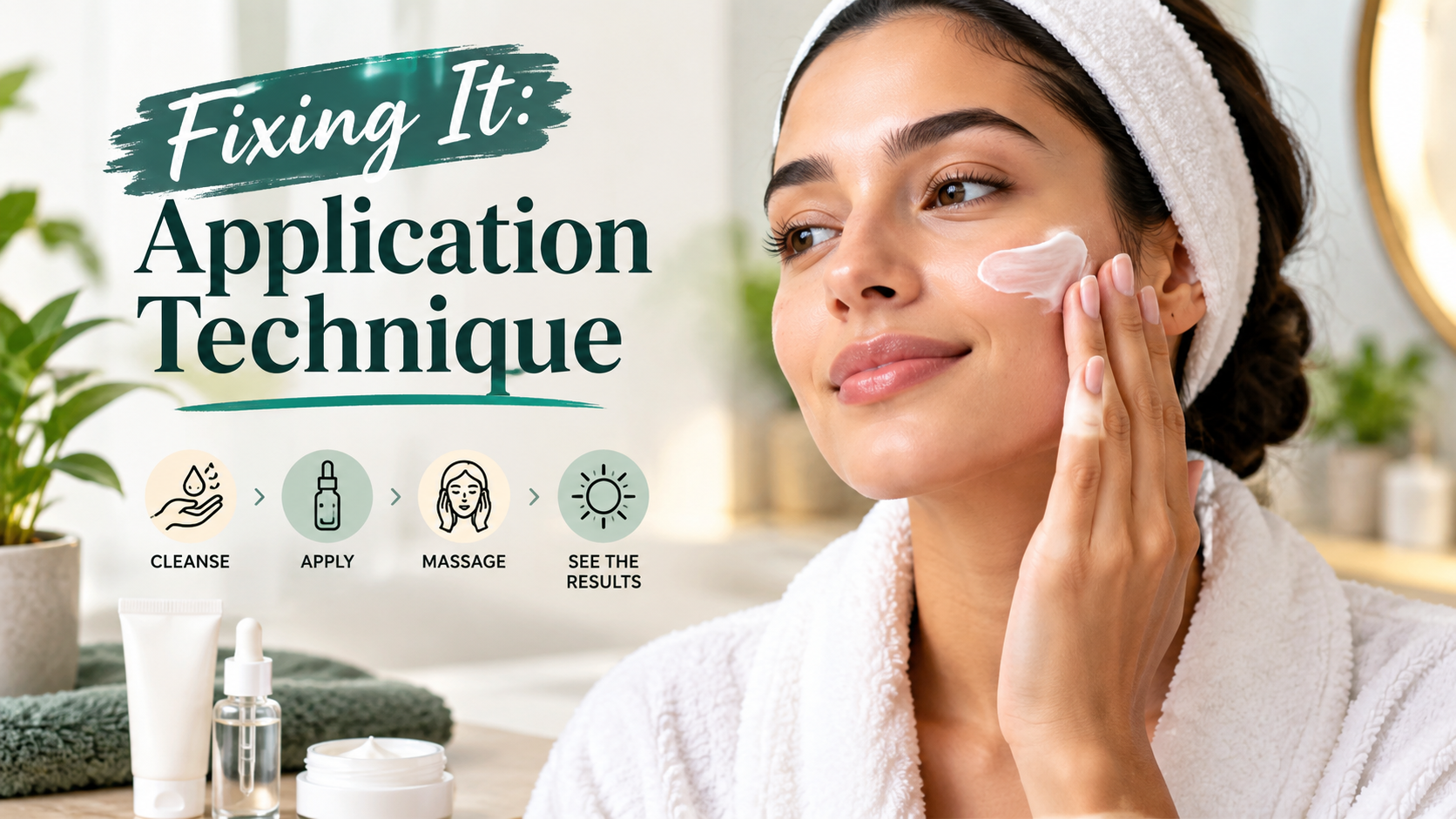
Apply in thin layers, not one heavy coat. L'Oréal Paris recommends starting with a small amount of foundation and gradually building coverage rather than applying everything in one heavy pass. Thin layers, blended and allowed to set before adding more, hold up significantly better through the day than a single thick application — piling on product all at once is often compared to layering oil paint, where more product just means more visible texture, not better coverage.
Choose the right tool for your skin type. According to YSL Beauty, a brush gives more control and more precise blending specifically for oily skin, while a damp sponge tends to work better for drier skin types. If you've been applying with your fingers or a dry sponge, switching tools alone can noticeably change how your foundation wears over the day.
Choose a formula built for oil control.Lightweight, oil-free, matte-finish foundations are simply less prone to sliding and separating than heavier, dewy formulas that weren't designed with oily skin in mind. If you're fighting caking no matter how carefully you apply, the formula itself may be working against you rather than the technique.
Fixing It: Setting the Look

Target powder, don't blanket it. Setting powder should be applied specifically where oil actually shows up first — usually the T-zone — rather than dusted across the entire face. Over-powdering is one of the fastest routes to the exact cakey look most people are trying to avoid in the first place.A light dusting is generally enough to control shine without flattening the complexion or emphasizing texture.
Use a setting spray to finish. A mattifying setting spray, as Maybelline notes, helps lock everything in place without adding more dry product weight on top of an already-set face. It's a lighter, more effective final step than reaching for more powder.
Fixing It: Midday Touch-Ups

When shine returns partway through the day, the instinct to rub at your face or pile on more foundation is the wrong move — rubbing tends to disturb and streak whatever's already sitting on your skin. Gently blotting the T-zone, cheeks, and chin with blotting paper or tissue removes excess surface oil without disrupting the base underneath.Follow with a very light dusting of loose powder rather than pressed powder for touch-ups, since pressed powder tends to sit heavier and contributes to buildup faster over the course of a day.
When The Problem Isn't Actually Oily Skin
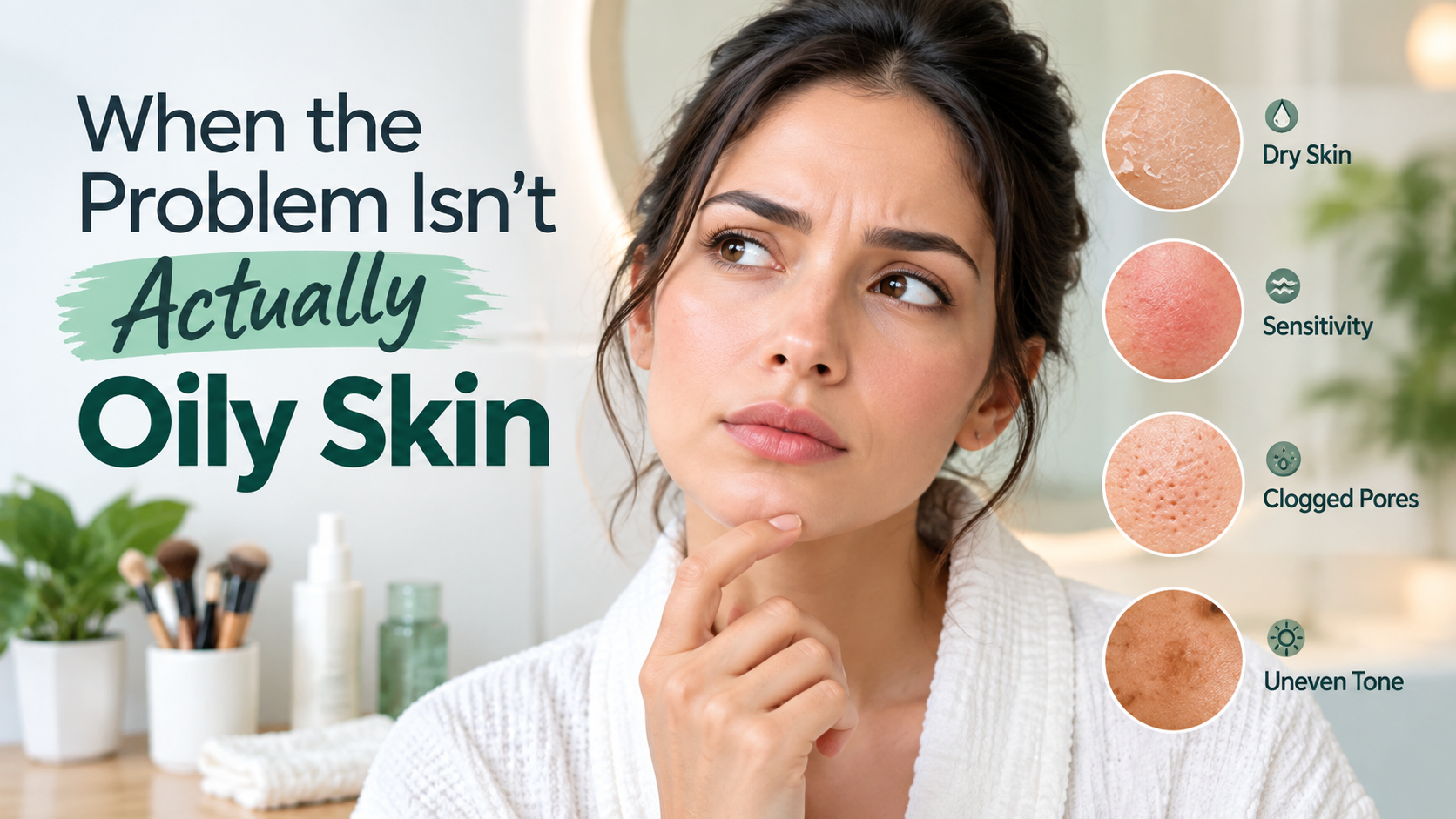
It's worth double-checking your actual skin type before assuming oil is the whole story. A simple test: cleanse your face, pat it dry, and wait about an hour without applying anything. If your T-zone shows real shine but your cheeks stay comfortable, you're likely dealing with combination skin rather than uniformly oily skin, which changes how you should be applying both skincare and foundation — heavier mattifying products across your entire face can actually create dry patches in areas that weren't oily to begin with, and those patches are exactly where caking tends to show up first.
Putting It All Together
Cakey foundation on oily skin is almost never really about needing more product. It's about proper hydration before you start, choosing formulas that match your skin type and each other, applying in thin, controlled layers rather than one heavy pass, and setting only where oil actually shows up rather than across the whole face. Fix the routine around the foundation before assuming the foundation itself is the problem — a lot of products that get blamed for looking cakey start performing noticeably better once the steps surrounding them are actually working with your skin instead of against it.
Share:

Stephanie Moore
Stephanie Moore is a Content Editor at Woman With Us with 5+ years of experience in fashion, beauty, and lifestyle content. She edits and refines blogs to make them clear, engaging, and helpful for readers.
Reviews
No reviews yet!