Vintage Vs. New Fur Coat: Which Is The Better Buy
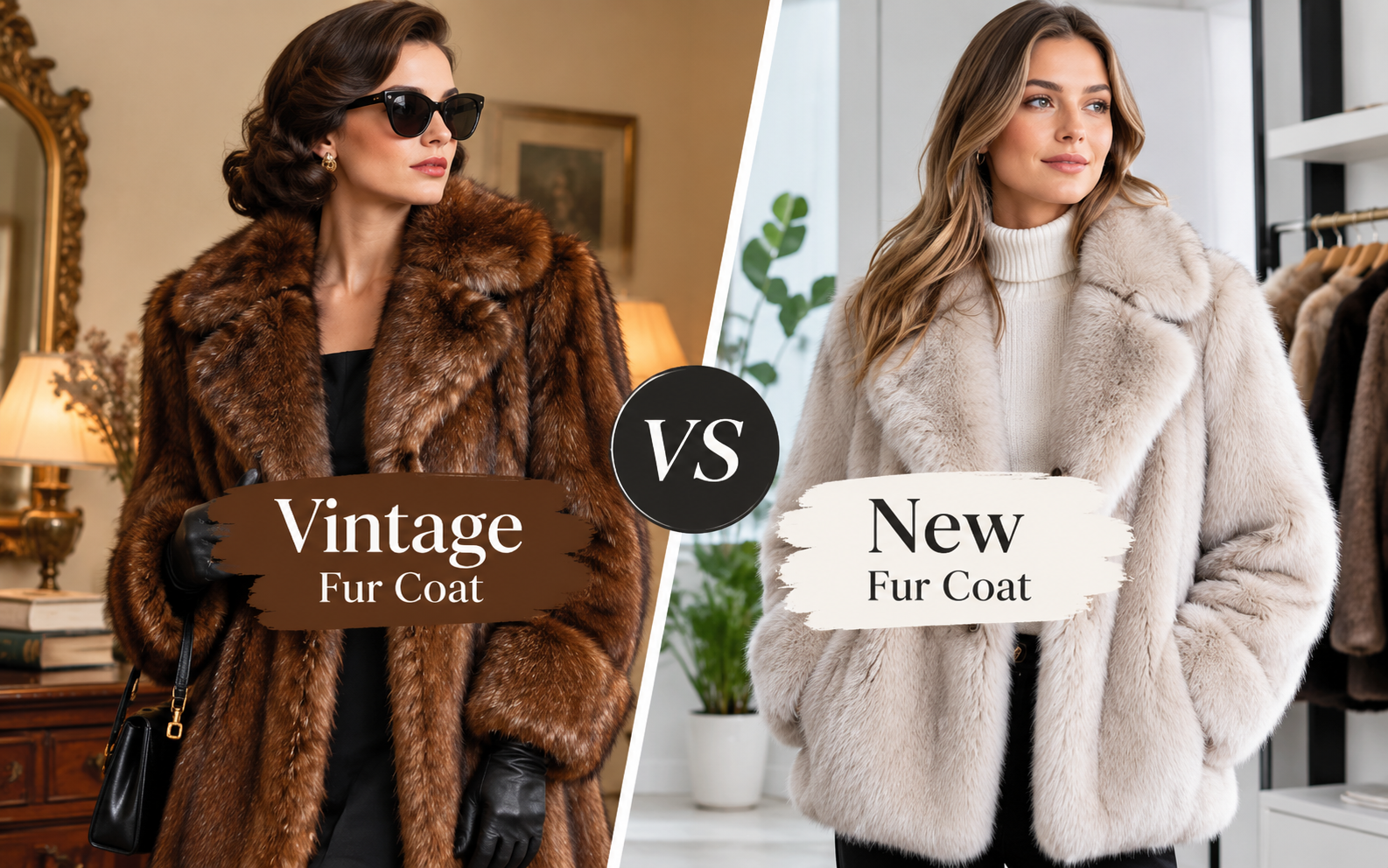
If you've decided you're comfortable with real fur the next question is whether to buy a new coat or a vintage one.Each has real advantages and real drawbacks and the right choice depends on your budget, your tolerance for risk, and how you feel about the ethics.This guide compares them side by side. If real fur isn't for you, a quality faux or wool coat is the simplest alternative, and the rest of this guide won't apply.
A Quick Note On Ethics
Animal welfare is the central objection to fur, and it's a values question, so reasonable people disagree.Buying vintage doesn't settle it for everyone.Some people object to wearing real fur in any form, while others see a coat that already exists as different from one produced today. It's worth deciding where you stand before comparing prices.
The Case For Vintage
No new production. Fashion Journal notes that some vintage sellers argue these coats are among the most sustainable fashion items, thanks to their craftsmanship and durability. Most arguments for the environmental advantage rest on the simple fact that nothing new is made.
Often cheaper. FurHatWorld, a fur seller, says buying vintage can give you a worn-in look and can cost less than buying new.
Unique style. Older coats come in cuts and silhouettes you won't find in current collections.
Not covered by every ban. According to Britannica, California's law banning the sale of new fur products since 2023 doesn't prohibit selling vintage fur or wearing and owning fur.
The Risks Of Vintage
Condition is the main gamble. Fashion Journal's experts warn about dry rot, which shows up as flaky areas on the underside or holes in the fur. They say repairs are often expensive and futile. Seam tears, particularly around the arms, are fixable, but the weight of fur means a coat can rip easily. They also point out that not all furs are made equally: some fox fur coats stay in good condition for years, while others deteriorate more easily.
Storage history matters more than age. FurHatWorld explains that dry rot shows up as stiff, cracked fur, often starting at the shoulders, and that coats stored in places like cedar closets can dry out. A mildew smell is a sign of rot that won't go away.
Legal complications. Vintage Bliss notes that some furs, such as those from endangered species, may be restricted or banned in some regions, so buyers should research local laws before purchasing.
Authenticity and labeling. FurHatWorld warns that some dealers mislabel fur types, which is why buying from a reputable source matters.
The Case For New
- Known condition. You're not guessing about hidden damage.
- Current fit and style. New coats reflect today's cuts and sizing.
- Servicing and warranty. Fashion Journal's expert notes it was once commonplace to have fur jackets routinely serviced when buying new.
The Drawbacks of New
- Price. New real fur is a major purchase.
- New production. It involves raising or trapping animals for pelts, which is the heart of the ethical objection.
- Legal limits. Sales of new fur are restricted in some places, so check local rules, especially if you're buying online.
Side By Side
| Factor | Vintage | New |
|---|---|---|
| Price | Often lower | Usually much higher |
| Condition certainty | Variable, needs inspection | Known |
| Environmental footprint | Often argued to be lower, since nothing new is made | Involves new production |
| Ethics | Still objectionable to some | The most direct objection |
| Legal risk | Check species and local laws | Check local sales restrictions |
| Care | May need restoration | Standard care |
How To Inspect A Vintage Coat
These tips come from fur sellers and the fur industry, so treat them as practical guidance rather than neutral research.
- Feel the fur and the leather. It should be supple, with some weight. Truth About Fur says brittle or crunchy skins suggest dry rot.
- Check elasticity. Gently stretch the leather side, which you can usually reach through the lining. If there's no stretch, walk away.
- Look for rips, especially at the armholes, shoulders, and neckline. Several rips often mean the fur is dried out.
- Check for shedding. A little is normal, but hairs coming out in clumps can be a sign of moths.
- Smell it. A musty or mildew odor is a warning sign.
- Buy from a reputable furrier or dealer who will stand behind the coat, and consider an appraisal for expensive pieces.
Caring For It Afterward
Fashion Journal recommends storing fur in a cool, dark space away from sunlight, using breathable garment bags, padded hangers, and lavender sachets against moths. Vintage Bliss adds that you should never dry a damp coat with heat or direct sunlight, and that a professional fur storage facility is worth considering for off-season storage.
A Note On Resale Value
Don't assume a vintage coat is worth a lot just because it's old. One fur seller, Firelady Fur, says value comes from material, condition, construction, size, and storage history, and that bad storage can matter more than age.
The Bottom Line
If you're comfortable with real fur, vintage usually has the lower footprint and the lower price, but it demands careful inspection and some luck with condition. New gives you certainty and servicing, at a much higher price and with the most direct ethical objection. If you're unsure on either front, a good faux or wool coat is an easy way to get the look without the questions.
Share:

Stephanie Moore
Stephanie Moore is a Content Editor at Woman With Us with 5+ years of experience in fashion, beauty, and lifestyle content. She edits and refines blogs to make them clear, engaging, and helpful for readers.
Reviews
No reviews yet!