Nylon Bag Vs Canvas Bag: A Practical Comparison
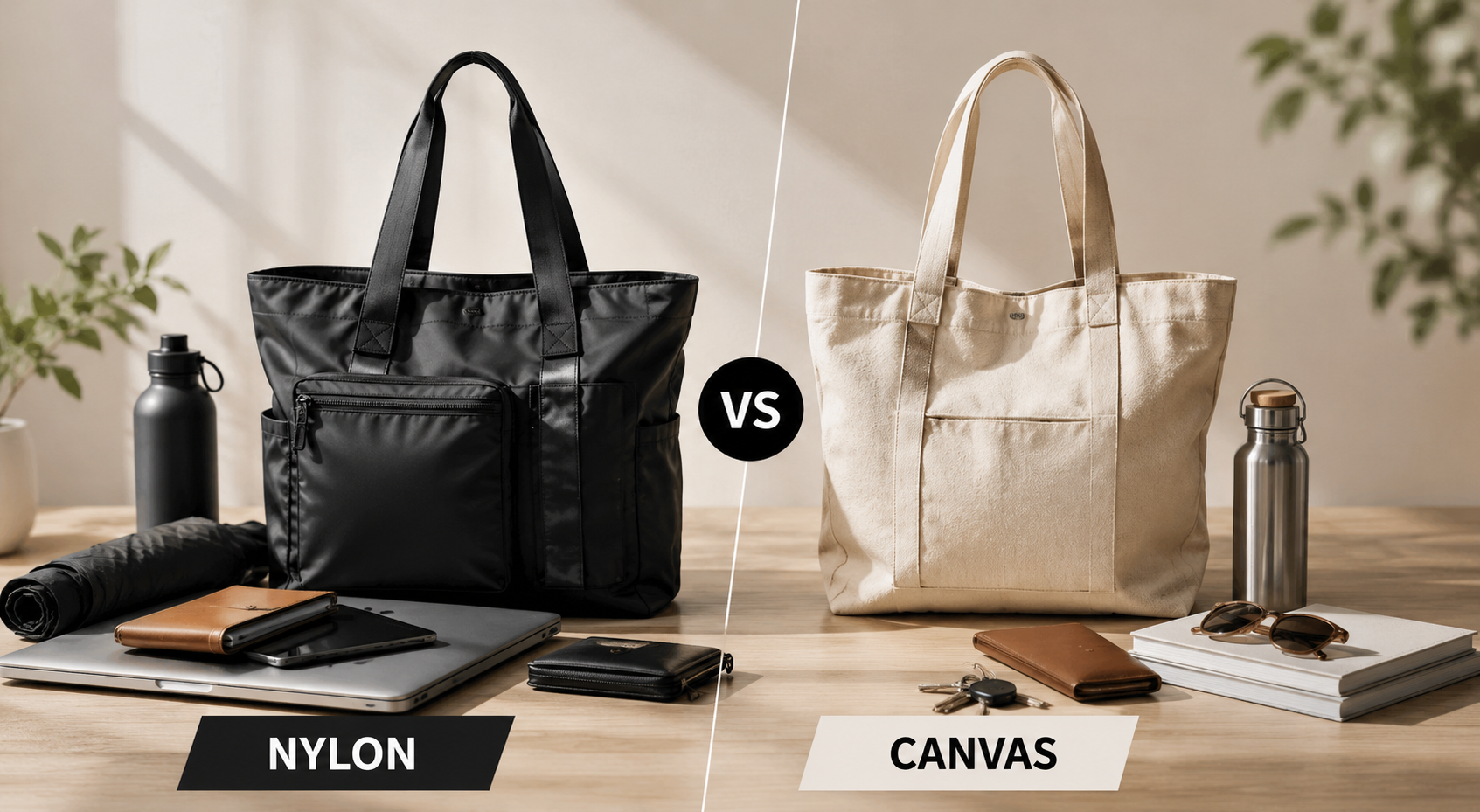
Shopping for a new bag often leads to the same debate. Nylon bag vs canvas bag comparisons pop up everywhere, yet the right answer really depends on how you plan to use it. Both materials have loyal fans for good reason. So, let us walk through the practical differences that actually matter day to day.
Where Each Material Comes From
Nylon is a man-made synthetic fabric, first developed for strength and flexibility decades ago. It quickly became popular in bags because it holds up well under repeated stress and movement.
Canvas, meanwhile, is a natural woven fabric, typically made from cotton fibers.Additionally, its long history in bag-making has given it a more traditional, timeless reputation.Therefore, these two materials come from very different origins, which shapes how they perform and look over time.
How Each Material Handles Everyday Damage
Daily bags inevitably face scrapes, spills, and general rough handling. How well a material resists this kind of damage matters enormously over time.
Nylon tends to resist tearing and abrasion more effectively than standard canvas.Furthermore, many nylon bags use ripstop weaving, which prevents small tears from spreading further.Consequently, nylon often holds up better in high-friction situations, like being tossed into a car or brushed against rough surfaces.
Canvas, especially heavier or waxed varieties, still performs admirably under regular use.Rather than fraying quickly, it tends to soften gradually while maintaining its overall structure.Beyond that, many canvas bags actually look better with a bit of wear, unlike materials that show damage as flaws.
Weather Resistance Comparison
Climate and weather conditions often influence which material makes more practical sense. This is one of the clearest differences between the two options.
Nylon naturally repels water fairly well, which makes it a dependable choice in rain or humidity.Additionally, many nylon bags include extra coatings for enhanced water resistance.As a result, nylon tends to perform more reliably in unpredictable or wet climates.
Canvas absorbs moisture more easily unless it has been treated with wax or a similar coating. However, waxed canvas closes much of this gap while still keeping that classic canvas appearance. Instead of avoiding canvas entirely in wetter climates, choosing a treated version often solves the issue effectively.
Comfort During Daily Carry
Comfort becomes increasingly important the more often you use a bag. Weight and structure both play a role in how a bag feels after hours of carrying it.
Nylon is generally lighter, which reduces overall strain during long days of use.Moreover, this lighter weight makes nylon bags a popular choice among commuters and frequent travelers.Overall, if minimizing bag weight matters to you, nylon typically has the advantage here.
Canvas tends to feel slightly heavier, particularly in thicker or waxed versions. That said, many people appreciate the sturdier, more substantial feel canvas provides. Consequently, personal preference plays a significant role in how this weight difference feels in practice.
Style Differences Worth Considering
Beyond function, aesthetic preference often plays a deciding role in this comparison. Nylon and canvas each bring a distinctly different look and feel.
Nylon typically leans toward a sleek, modern, or utilitarian style.This makes it a natural fit for minimalist wardrobes or active, on-the-go lifestyles.Additionally, nylon tends to resist fading better, keeping colors looking fresh for longer.
Canvas offers a more relaxed, classic aesthetic that pairs naturally with casual outfits. It also develops character over time, similar to the way denim ages. Fortunately, many people find this evolving look adds personality rather than signaling wear and tear.
Final Thoughts
The nylon bag vs canvas bag decision ultimately comes down to your personal priorities and lifestyle.Choose nylon if durability, water resistance, and lightweight comfort top your list.Finally, choose canvas if a classic, timeless look matters more to you than pure functionality.Either material can serve you well, as long as it matches how you actually plan to use it.
Share:

Stephanie Moore
Stephanie Moore is a Content Editor at Woman With Us with 5+ years of experience in fashion, beauty, and lifestyle content. She edits and refines blogs to make them clear, engaging, and helpful for readers.
Reviews
txWB
DPqx
JQVY
txWB
DPqx
JQVY
txWB
DPqx
JQVY
txWB
DPqx
JQVY
txWB,,)",.).,'
DPqx
JQVY
txWB'UsITvA<'">)NZjNXa
DPqx
JQVY
txWB
DPqx
JQVY
txWB
DPqx
JQVY
txWB
DPqx...())('("
JQVY
txWB
DPqx'xExBPa<'">)EBryoa
JQVY
txWB
DPqx
jqvY(,)".('..)
txWB
DPqx
JQVY'hmtmWv
txWB
DPqx
JQVY
txWB
DPqx
JQVY
txWB
DPqx
JQVY
txWB
DPqx
JQVY
Jackie
Look at the other reviews
You already know it's going to be a terrible product when they flood their own website with 5-star reviews, but the fact that every single one of them looks like my cat smashed his head into the keyboard is truly embarrassing