Makeup Tips For Oily Skin: A Step-By-Step Routine That Lasts
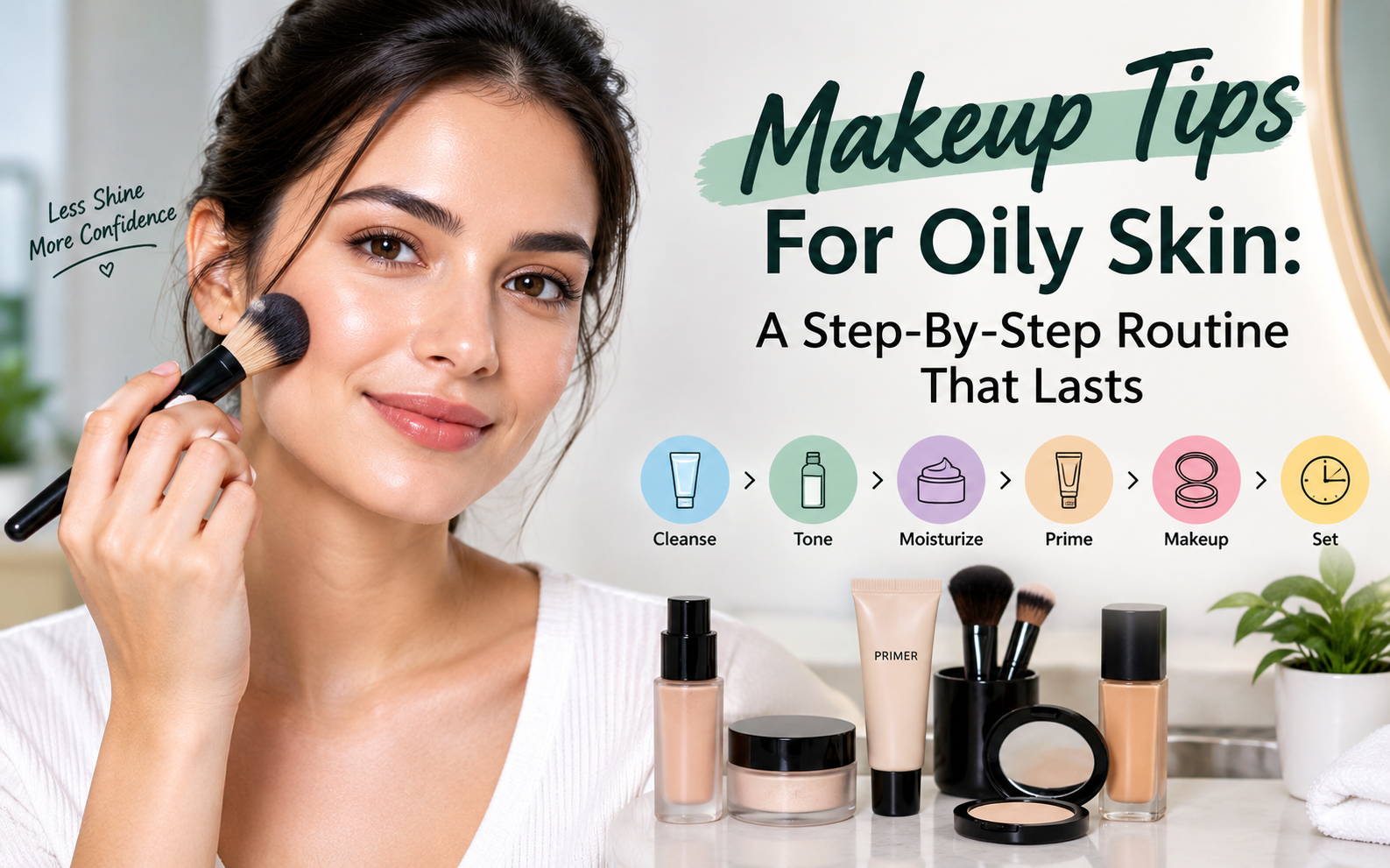
Oily skin and makeup can feel like a losing battle. By lunchtime, foundation has slid, concealer has creased, and your T-zone looks like it's been polished.The good news is that most of the problem is fixable with a few changes to prep, product choice, and technique.Here's a step-by-step routine, drawn from beauty brand and makeup artist guides.
Step 1: Prep Your Skin
A good base starts before any makeup. Cleanse, then moisturize, and don't skip the moisturizer.Rumbie points out that skipping it often pushes oily skin to overcompensate by producing even more oil.A lightweight, oil-free formula is the way to go.Yon-Ka adds that using a balancing toner first can remove excess surface oil before you begin.
Revlon says oily skin needs a clean, balanced base to help makeup adhere, and one step that most oily skin types skip is giving the skin that prep. If you like, Maybelline suggests an optional "sandwich spray" method: let your skincare absorb, then spritz setting spray to lock it in before makeup.
Step 2: Prime, But Only Where You Need It
Revlon calls primer the single most important step for long-lasting wear on oily skin. But you don't have to apply it everywhere. Celebrity makeup artist Caitlyn Dominic, quoted by Rumbie, recommends focusing a mattifying or pore-blurring primer on the T-zone, since that's where oil concentrates most.
There's some disagreement on formula. Sa Sa suggests a silicone-based primer to blur pores and prevent oil from breaking down foundation, while Yon-Ka suggests a silicone-free blurring primer if you have large pores on your cheeks.Try a few and see what works on your skin.
Then wait. Rumbie says to give primer one to two minutes to set, and another guide from Smytten says two to three. Putting foundation on too soon can make both products pill.
Step 3: Choose The Right Foundation And Apply It Thin
Maybelline recommends a liquid matte or powder foundation for oily skin, and Revlon says the best formulas are oil-free and long-wearing.The bigger factor is how you apply it. Revlon says over-application in one pass is the primary cause of a cakey finish, so build coverage in thin layers.
Sa Sa suggests using a damp makeup sponge and tapping the foundation onto the skin with a bouncing motion. Smytten agrees that pressing foundation into the skin, rather than rubbing it around, helps it grip and last longer.
Step 4: Conceal Where Needed
Revlon says the best concealer for oily skin follows the same rules as foundation: oil-free and long-wearing. Use it only where you need it, and blend with a light hand.
Step 5: Set With Powder, Then Spray
Setting is where oily skin makeup lives or dies. Sa Sa recommends translucent setting powder on the T-zone and high points of the face.Yon-Ka calls the two-step process the secret weapon and says to press, not dust: take translucent loose powder on a puff or dense brush and press it into the skin to lock the foundation in place.
Finish with a mattifying setting spray, applied in light, even layers rather than soaking your face, as Smytten advises. Revlon says that a routine combining primer, matte foundation, powder, and setting spray can last six to eight hours.
Step 6: Don't Forget Your Eyes And Lips
Oily lids can make eyeshadow crease and slide. Maybelline says to blot excess oil from the lids and apply a mattifying eye primer, then use long-wear or waterproof eye products.Yon-Ka calls an eye primer non-negotiable and suggests setting it with a light dusting of translucent powder before shadow.For lips, Maybelline suggests gently exfoliating and blotting before applying product.
Step 7: Touch Up Without Making A Mess
The biggest mistake is adding more powder on top of oil.Pleasing Care recommends blotting first: press a clean blotting sheet on shiny areas like the forehead, nose, and chin, lift without rubbing, then add powder, concealer, or setting spray only where the finish still needs help. Smytten agrees that blotting papers work better than adding more powder throughout the day.
Common Mistakes To Avoid
- Skipping moisturizer or primer. Smytten says both steps are crucial for creating a smooth base and preventing your skin from overproducing oil.
- Applying everything in one thick layer. Thin layers last longer.
- Rubbing foundation in. Pressing and tapping works better.
- Adding powder on top of shine. Blot first.
- Forgetting to set. Maybelline notes that skipping setting spray can cause makeup to smudge or break down.
Tools And Products To Keep In Your Bag
A pack of oil-blotting sheets, a small pot of translucent powder, and a travel-size setting spray cover most midday needs. Keep touch-ups light, and focus on the areas where oil shows up first.
A Note On These Sources
Many of these guides come from makeup brands and beauty retailers, so they naturally recommend products and routines their companies sell. The steps are consistent across them, but individual skin differs.If a formula stings or breaks you out, stop using it, and consider talking to a dermatologist if you have persistent skin issues.
The Bottom Line
Makeup that lasts on oily skin comes down to preparation and restraint: moisturize, prime your T-zone, build thin layers, press powder into oily areas, finish with a matte setting spray, and blot before you touch up. Get those basics right, and you'll rely far less on layers of product to get through the day.
Share:

Stephanie Moore
Stephanie Moore is a Content Editor at Woman With Us with 5+ years of experience in fashion, beauty, and lifestyle content. She edits and refines blogs to make them clear, engaging, and helpful for readers.
Reviews
No reviews yet!