Lip Liner That Doesn't Dry Lips: What To Look For
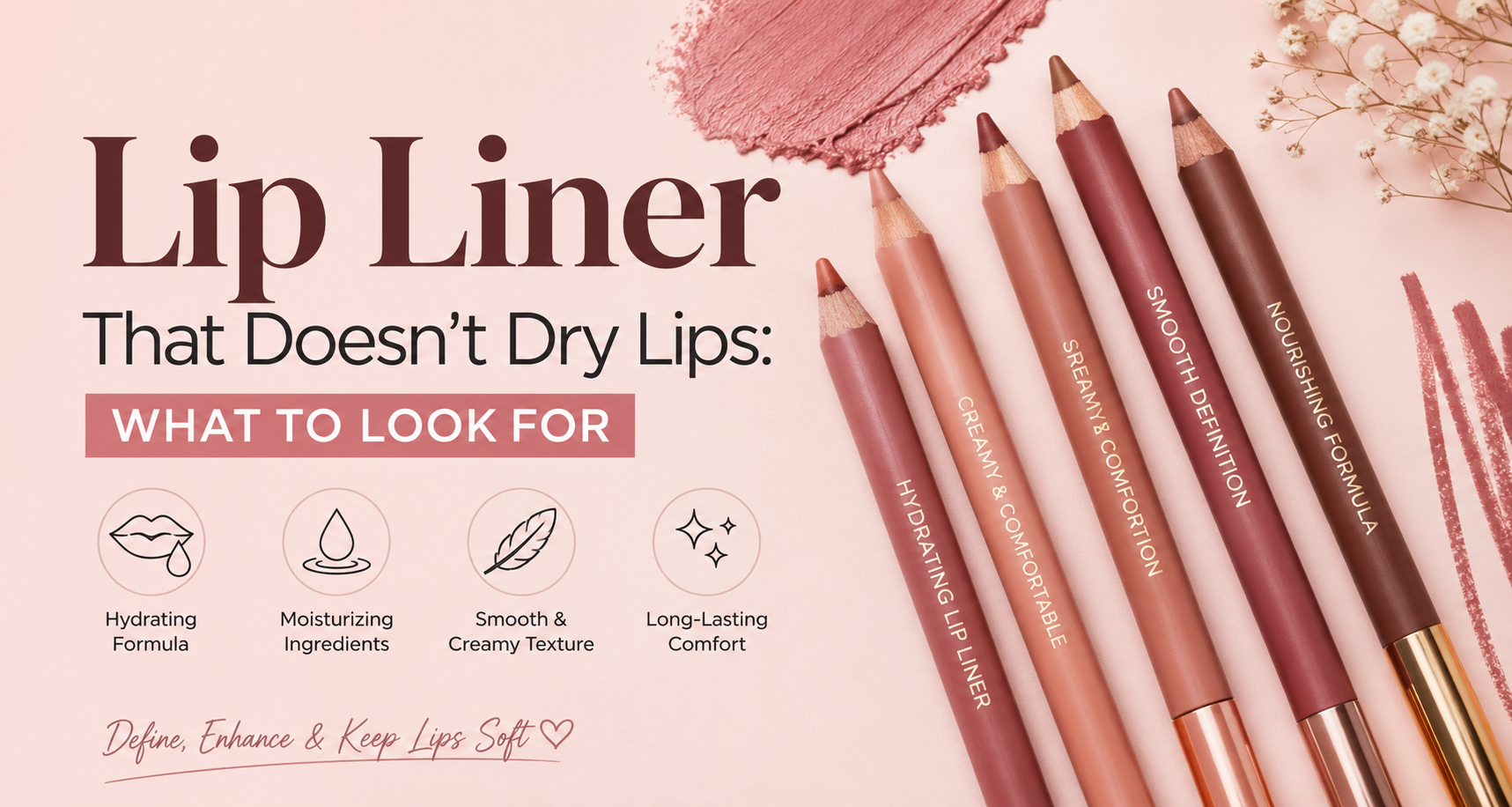
Lip liner should define your lips, not leave them feeling tight and uncomfortable by lunchtime.Unfortunately, many traditional formulas do exactly that.Finding a lip liner that doesn't dry lips out means paying attention to ingredients and texture, not just color payoff.So, let us go through what actually makes a difference.
Why Some Lip Liners Feel So Drying
Many classic lip liners rely on a firm, waxy base to create precise lines. That firmness, though, often comes at the cost of comfort.
Matte formulas tend to be the biggest culprits when it comes to dryness.Additionally, some formulas contain drying alcohols or heavy pigments that pull moisture from the lips.Therefore, understanding what causes the dryness makes it much easier to shop smarter.
Ingredients That Keep Lip Liner Comfortable
The right ingredients can completely change how a lip liner feels throughout the day. Certain formulas prioritize hydration without sacrificing color intensity or precision.
Look for liners containing shea butter or jojoba oil in the ingredient list.These ingredients add slip and softness, which prevents that tight, cracking feeling.Furthermore, vitamin E is another ingredient worth checking for, since it helps nourish delicate lip skin.
Hyaluronic acid has also made its way into newer lip liner formulas.It helps draw moisture into the lips rather than just sitting on the surface.Beyond that, avoiding liners with high alcohol content significantly reduces the chances of dryness.
Choosing The Right Formula Type
Not all lip liners are created with the same finish or texture. Understanding the difference helps you avoid formulas that dry out your lips unnecessarily.
Creamy or satin-finish liners tend to feel far more comfortable than ultra-matte versions.These formulas glide on smoothly instead of dragging or tugging at the skin.Consequently, they also blend more easily into lipstick or gloss without looking harsh.
If you love the look of matte lips, choose a hybrid formula instead of a fully dry one.Many brands now offer "matte-hydrating" liners that balance both qualities.Overall, this middle-ground option gives you definition without the uncomfortable trade-off.
Prep Your Lips Before Applying Liner
Even the best lip liner performs poorly on unprepped, dry lips. A little prep goes a long way toward improving both comfort and wear time.
Gently exfoliate your lips once or twice a week to remove flaky skin.Follow this with a hydrating lip balm a few minutes before applying any liner.As a result, the liner glides on smoothly instead of catching on rough patches.
Avoid applying liner immediately after a heavy balm application, since this can affect precision.Instead, let the balm absorb for a minute or two beforehand.This small pause makes a noticeable difference in how cleanly the liner applies.
Application Tips For Long-Lasting Comfort
How you apply lip liner affects comfort just as much as the formula itself. Light, short strokes tend to feel gentler than one continuous, pressed line.
Warm the liner slightly between your fingers if it feels too firm or hard to work with.This softens the product and makes application smoother overall.Moreover, avoid dragging the liner too many times over the same area, since repeated friction can worsen dryness.
Finish with a light layer of lip balm or gloss over the liner if your lips still feel tight.This adds moisture back without compromising the defined shape underneath.Fortunately, this small step keeps lips comfortable throughout the day.
Final Thoughts
Finding a lip liner that doesn't dry lips comes down to choosing the right ingredients, formula type, and application technique.Focus on hydrating ingredients like shea butter or hyaluronic acid, and avoid overly matte, alcohol-heavy formulas.Finally, always prep your lips beforehand for the smoothest, most comfortable application.With the right liner, you can enjoy definition and comfort at the same time.
Share:

Stephanie Moore
Stephanie Moore is a Content Editor at Woman With Us with 5+ years of experience in fashion, beauty, and lifestyle content. She edits and refines blogs to make them clear, engaging, and helpful for readers.
Reviews
No reviews yet!