How Do I Exfoliate Dry Sensitive Skin Without Irritation?
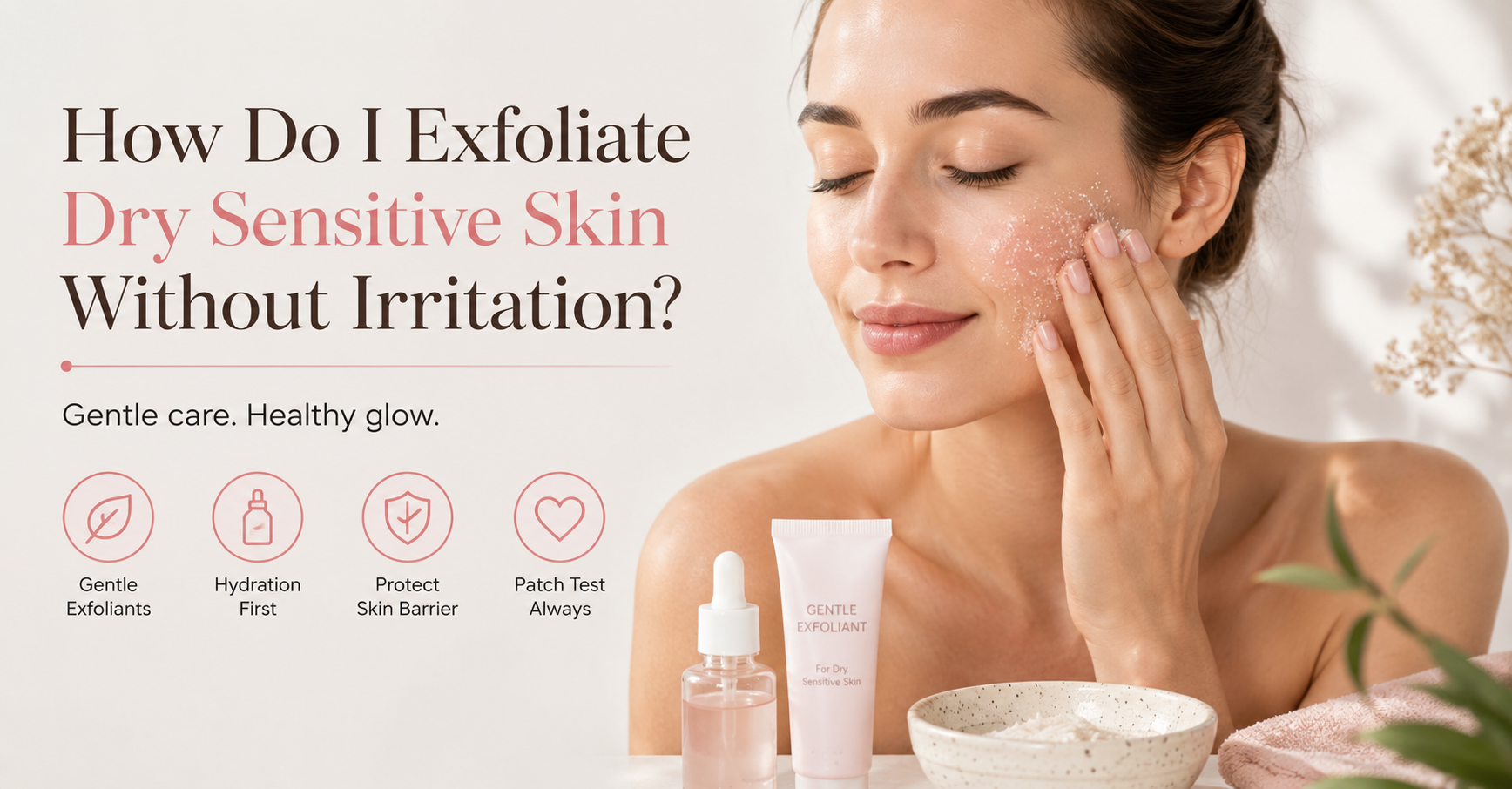
Exfoliating always feels a little risky when your skin is both dry and sensitive.So, how do I exfoliate dry sensitive skin without irritation actually creeping in afterward? The truth is, it comes down to choosing gentler methods and respecting your skin's limits.Once you understand the right approach, exfoliation can genuinely improve your skin instead of aggravating it.
Why This Skin Type Needs A Different Approach
Dry, sensitive skin already has a weaker protective barrier than normal skin. As a result, harsh exfoliation can easily trigger redness, tightness, or flaking.
Traditional scrubs and strong acids often make this problem worse rather than better.Additionally, over-exfoliating can strip away natural oils your skin desperately needs.Therefore, this skin type requires a much gentler, more strategic exfoliation routine overall.
Choose Chemical Exfoliants Over Physical Scrubs
Physical scrubs rely on friction, which can easily irritate delicate, dry skin. Chemical exfoliants, on the other hand, dissolve dead skin cells without any harsh scrubbing motion.
Lactic acid is one of the gentlest chemical exfoliants available for sensitive skin.It exfoliates while also drawing moisture into the skin, which helps prevent additional dryness.Beyond that, mandelic acid offers similar benefits with an even softer profile for reactive skin types.
Enzyme-based exfoliants are another excellent option worth trying.These formulas use natural fruit enzymes to gently break down dead skin cells.Consequently, they tend to feel especially soothing compared to stronger acids or physical scrubs.
Start Low And Go Slow
One of the biggest mistakes people make is exfoliating too often, too soon. Even a gentle formula can cause irritation if introduced too aggressively.
Begin with once a week and observe how your skin responds over the following days.If your skin feels calm and comfortable, you can slowly increase frequency if needed.Furthermore, patch testing any new exfoliant on a small area first helps prevent widespread irritation.
Avoid combining multiple exfoliating products at once, even if each one seems gentle individually.Layering different acids or enzymes can overwhelm sensitive skin quickly.Instead, stick to one exfoliating step within your routine at a time.
Prep And Support Your Skin Properly
Exfoliation works best when your skin is already well-supported through the rest of your routine. Skipping hydration steps often makes exfoliation feel harsher than it needs to be.
Apply a gentle, fragrance-free moisturizer consistently, even on days you are not exfoliating.This helps maintain your skin barrier and reduces overall sensitivity.Moreover, using a hydrating serum with ingredients like hyaluronic acid can add an extra layer of comfort.
Always exfoliate on slightly damp, clean skin rather than dry or freshly cleansed skin.This reduces friction and allows the product to work more gently.Overall, this small adjustment can make a noticeable difference in comfort.
What To Avoid Completely
Certain ingredients and habits consistently cause problems for dry, sensitive skin. Avoiding them entirely often prevents irritation before it starts.
Skip products containing high concentrations of glycolic acid or salicylic acid, since these tend to be too strong for this skin type.Additionally, avoid exfoliating tools like brushes or rough cloths, which add unnecessary friction.Fragrance and alcohol-based products should also be avoided, since both commonly trigger sensitivity.
Never exfoliate skin that is actively irritated, cracked, or inflamed.Doing so almost always worsens the condition instead of improving it.Instead, wait until your skin has calmed down before reintroducing any exfoliating step.
Final Thoughts
Figuring out how do I exfoliate dry sensitive skin without irritation comes down to choosing gentle formulas and respecting your skin's pace.Focus on lactic acid, mandelic acid, or enzyme-based exfoliants used sparingly and consistently.Finally, always pair exfoliation with proper hydration and never rush the process, even if results feel slow at first.With the right approach, smoother skin and irritation do not have to go hand in hand.
Share:

Stephanie Moore
Stephanie Moore is a Content Editor at Woman With Us with 5+ years of experience in fashion, beauty, and lifestyle content. She edits and refines blogs to make them clear, engaging, and helpful for readers.
Reviews
No reviews yet!