How Do I Get Volume In My Hair Without It Looking Stiff?
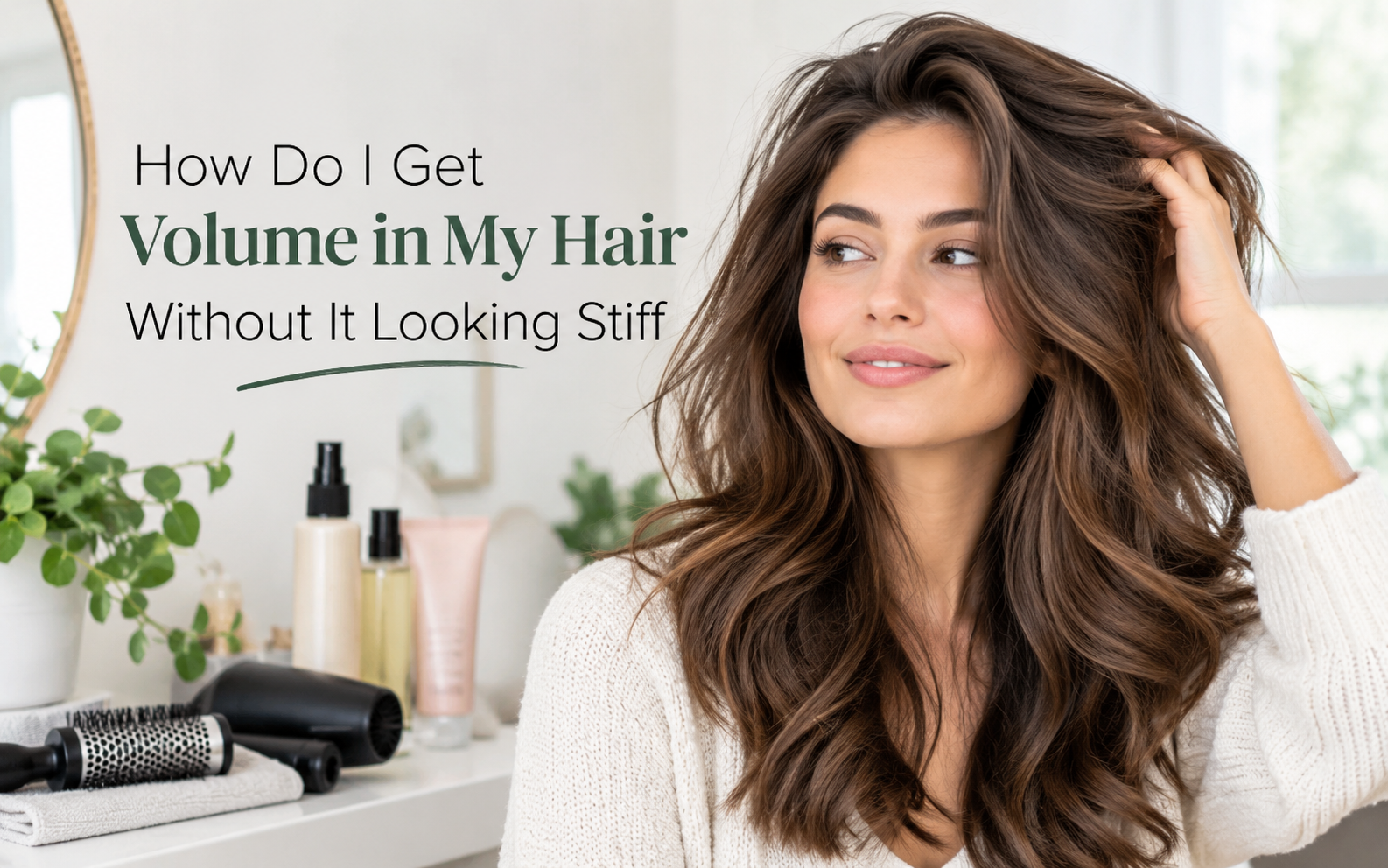
Big, bouncy hair sounds simple enough until you actually try to create it. A little mousse, a mist of texture spray, flipping your head upside down — and suddenly your roots look less "effortlessly full" and more like you've been styling for three hours straight. The stiffness problem almost always comes down to product choice and amount, not the volume technique itself.
Why Hair Ends Up Stiff In The First Place
Older-generation volumizing products — the classic 1980s mousses and gels — relied on heavier polymers and alcohol-based formulas that genuinely did stiffen hair as they dried. That reputation has stuck around even though formulas have changed significantly. Today's volumizers are generally built to support the roots and thicken the diameter of individual strands without making hair feel sticky or stiff, but the wrong amount of even a good product can still tip into crunchy territory.
Start With A Clean, Lightweight Base
Your shampoo and conditioner routine sets the stage before any styling product even enters the picture. Look for a lightweight, sulfate-free volumizing shampoo that cleanses without stripping natural oils entirely — hair stripped too aggressively often overcompensates with oil production, which itself kills volume by the end of the day.
Conditioner placement matters just as much.Keep it focused on the mid-lengths and ends, where hair actually needs the extra softness, rather than applying it anywhere near the roots or scalp. Conditioner at the root is one of the most common, avoidable causes of flat, weighed-down volume.
Choose Formulas Built To Support, Not Coat
The real distinction between a product that adds stiff volume and one that adds soft volume comes down to how it works. According to Virtue Labs, the better modern formulas are designed to support the hair's internal structure rather than simply coat the outside of each strand — that's what allows volume without the heavy, sticky feeling older products were known for.
A lightweight volumizing mousse applied to damp roots builds genuine lift and flexible hold without stiffness, making it one of the simplest ways to add body while keeping movement natural. Root-lifting sprays work on a similar principle, applied before blow-drying specifically to create structure at the base without weighing down the rest of the hair.
Apply Product Where You Actually Need It
A common mistake is treating the whole head the same way when volumizing. Put product specifically where you want lift — generally at the roots and crown — rather than coating the entire length of your hair. Misting a texturizing spray directly underneath a section of hair, rather than spraying the whole surface, is a small technique shift that makes a real difference in how natural the final result feels.
Master The Blow-Dry
Technique does more heavy lifting here than any single product. Rough-drying hair until it's mostly dry, with the airflow directed against the direction hair naturally falls, builds volume at the source before any additional styling even begins. Flipping your head upside down while blow-drying remains one of the most consistently recommended techniques for this exact reason — it lifts hair away from the scalp as it dries, and the volume holds once you return upright, without needing extra product to compensate.
Using a round brush to lift sections at the crown while blow-drying adds targeted height specifically where fine or flat hair tends to need it most, without requiring you to add volume evenly across every section.
Finish With A Light, Flexible Hold
If you use hairspray as a final step, reach for one labeled "flexible hold" or "light hold" rather than a traditional strong-hold formula.These provide genuine control without the heaviness and stiffness associated with older, stronger sprays. Layering a small amount and reapplying only if needed tends to work better than applying one heavy coat upfront — it's easier to add more hold than to undo an overly stiff result.
Texturizing Sprays Are Your Friend Here
A texturizing spray specifically adds body and grit without making hair feel crunchy or sticky, which makes it a genuinely good alternative to a stronger hold product when the goal is movement and fullness rather than a fixed, sprayed-in-place style. It's particularly effective for maintaining volume through the day without needing to reapply heavier products.
Avoid These Common Traps
Using too much product in one spot is the single most common cause of stiffness — a little goes further than it seems like it should, and it's always easier to add more than to remove excess once it's already dried into your hair. Heavy creams, gels, and waxes near the roots work against volume almost every time, regardless of how the product performs elsewhere on your hair.And frequent, high-heat styling without a protectant weakens hair over time, making it harder to hold any kind of volume at all, stiff or soft.
Don't Forget The Cut
Even the best products and techniques can only do so much if your haircut is working against you. Split ends and uneven weight distribution cause hair to look flat and lifeless regardless of styling effort, so regular trims every six to eight weeks genuinely help maintain volume by preventing weight from building up unevenly at the ends.
The Bottom Line
Soft, bouncy volume without stiffness comes down to a few consistent habits: lightweight formulas that support hair's structure rather than coat it, product applied specifically at the roots rather than all over, a blow-dry technique that builds lift at the source, and a light, flexible hold rather than a heavy-handed finishing spray. Get those basics right, and volume reads as natural rather than engineered — which is really the whole goal.
Share:

Stephanie Moore
Stephanie Moore is a Content Editor at Woman With Us with 5+ years of experience in fashion, beauty, and lifestyle content. She edits and refines blogs to make them clear, engaging, and helpful for readers.
Reviews
No reviews yet!