Best Hair Mask for Dry Frizzy Hair
"Frizz Control Secrets"
Published on Mar 17th, 2026
Hair
Raise your hand if you've ever pulled a brush through your hair and heard that horrifying crunch. Dry, frizzy hair isn't just a bad hair day. It's a daily frustration that affects how you feel the moment you look in the mirror.
- What Causes Dry and Frizzy Hair?
- Why Hair Masks Work Better Than Regular Conditioner
- Best Hair Masks for Dry Frizzy Hair
- Chronologiste Intense Regenerant Hair Mask
- Gloss Absolu Crème Hydra-Glaze Mask
- Genesis Reconstructing Anti-Hair-Fall Mask
- How to Use a Hair Mask Properly
- Common Haircare Mistakes
- FAQ's
The good news? A well-formulated hair mask can completely transform your strands in a single wash. Unlike a standard conditioner, which only coats the surface of your hair and is rinsed away in seconds, a hair mask works deeper. It penetrates the cortex, which is the inner layer of your hair, seals the cuticle (the outer layer), and fills each strand with the moisture it has been lacking. If your routine doesn't already include one, it absolutely should.
Below, you'll find everything you need to pick the best hair mask for dry frizzy hair, from what's actually causing your frizz to the top products worth your money in 2026.
What Causes Dry and Frizzy Hair?
Before throwing products at the problem, it helps to understand what you're actually dealing with. Frizz is almost always a moisture story, but the chapter that caused it varies from person to person.
- Lack of moisture: When the hair shaft doesn't have enough water content, the outer cuticle lifts and roughens, catching light unevenly and creating that puffy, undefined texture.
- Heat styling damage: Flat irons, curling wands, and blow dryers strip the natural lipid layer from your hair over time. Without that protective coating, moisture escapes rapidly, and frizz moves in.
- Environmental factors: Humidity is the classic culprit, but dry climates, hard water, UV exposure, and even wind contribute to structural damage and dehydration.
- Hair structure and porosity: High-porosity hair absorbs moisture quickly but loses it just as fast. Low-porosity hair resists moisture uptake altogether. Both types struggle, just in different ways.
Why Hair Masks Work Better Than Regular Conditioner
Standard conditioners are designed for rinse-out convenience; they smooth the cuticle and detangle, but that's largely where they stop. Hair masks are a different category entirely.
- Deep hydration: Masks contain a higher concentration of conditioning agents, fatty alcohols (moisturizing ingredients derived from natural oils), and humectants (substances that attract water) that penetrate beyond the cuticle into the cortex—the inner structural layer of the hair where actual repair happens.
- Repairing damaged hair fibers: Ingredients like hydrolyzed keratin (a protein broken down into smaller pieces) and plant proteins fill in gaps along the hair shaft caused by chemical processing and heat damage, temporarily restoring tensile strength (resistance to breaking when pulled).
- Smoothing cuticles: By sealing the cuticle flat meaning laying down the outer scales of the hair masks reduce the rough surface that causes light scattering. This is what makes frizzy hair look dull and undefined.
The difference is noticeable within one or two uses for most hair types. That's not marketing language. It's chemistry.
Key Ingredients That Fix Dry Frizzy Hair
Not all masks are created equal. The ingredients list tells you everything. Here's what to look for, and why it matters:
- Hyaluronic Acid: Draws water into the hair shaft (the main body of each hair strand) and holds it there, plumping each strand from within for lasting softness.
- Natural Oils (Argan, Marula, Jojoba): Coat the cuticle to lock in moisture, add shine, and protect against environmental aggressors.
- Keratin: Fills structural gaps in damaged hair fibers, improving elasticity (the ability of hair to stretch and return to shape) and dramatically reducing breakage.
- Vitamin E: An antioxidant (a substance that helps guard against damage from unstable molecules) that neutralizes free radical damage from UV and heat, preserving the hair's natural lipid (oil) barrier.
Best Hair Masks for Dry Frizzy Hair
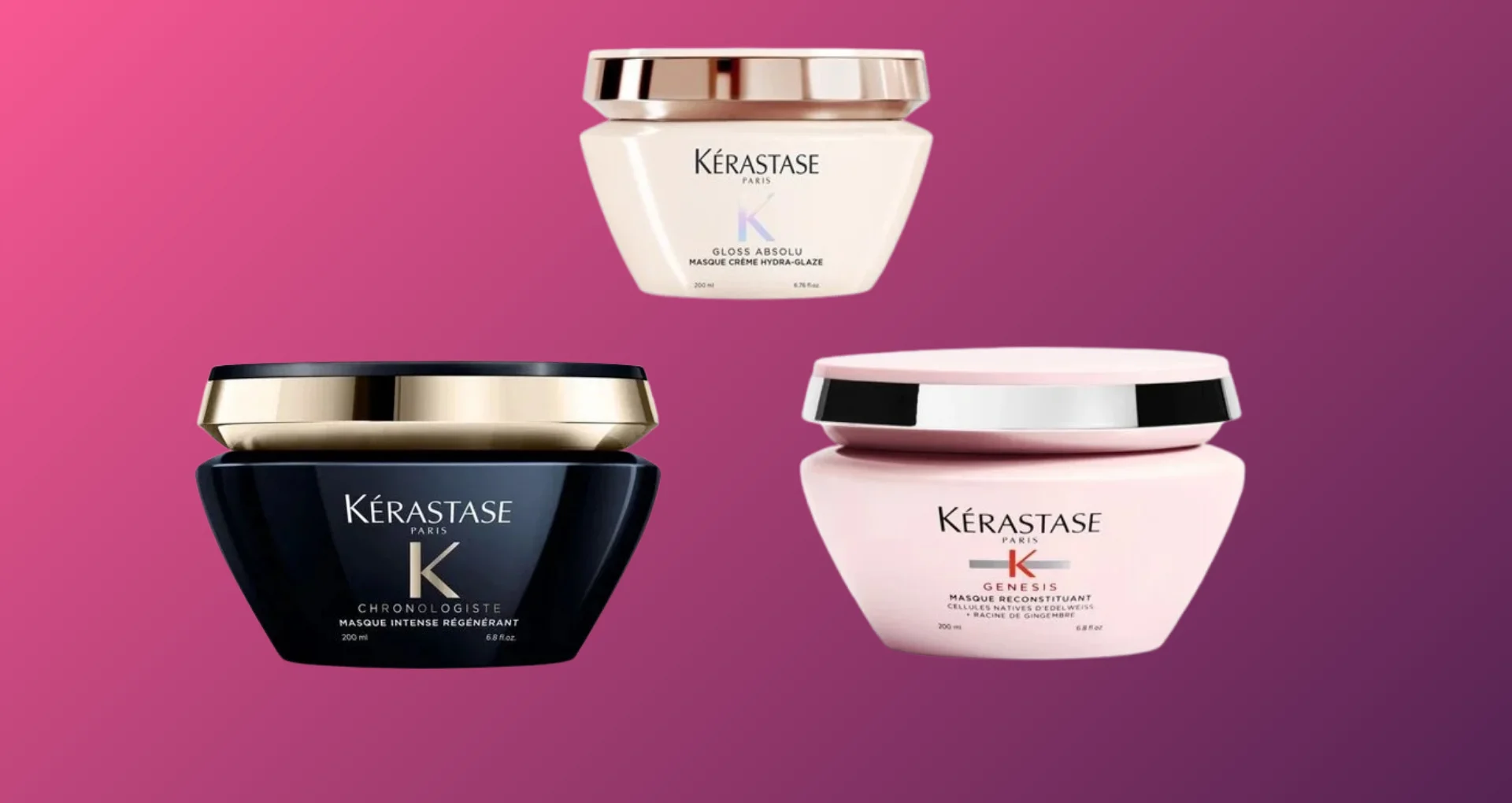
Three products consistently stand out for delivering genuine results on dry, frizz-prone hair, each addressing the problem from a slightly different angle.
1. Chronologiste Intense Regenerant Hair Mask
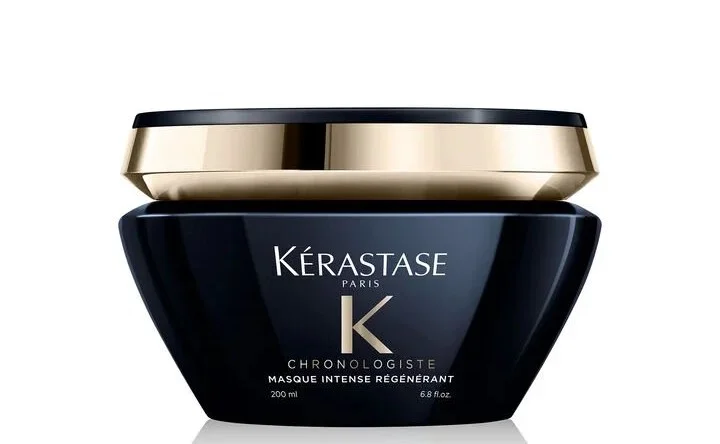
Kérastase's Chronologiste Masque is what you reach for when your hair has been through it: color, bleach, years of heat, or all three at once. This is a regenerative treatment, not just a hydration hit.
Key Ingredients:
- Hyaluronic Acid, Abyssine, Vita-Ciment complex, and Argan Oil.
- Best For: Severely damaged, coarse, or color-treated dry hair.
- Texture: Rich, creamy balm that melts on contact with warmth.
- How to Apply: Work through towel-dried hair from mid-lengths (about halfway down your hair length) to ends. Leave for 10 to 20 minutes, then rinse thoroughly.
- Frequency: Once or twice per week for intensive repair.
What makes it stand out: it deeply repairs structural damage, visibly reduces breakage after two to three uses, and delivers long-lasting frizz control across all hair textures.
Worth knowing before you buy: it sits at a higher price point, the rich texture can weigh down very fine hair, and it works best when left in for the full recommended time. The scent is also quite strong, so it may not suit fragrance-sensitive users.
2. Gloss Absolu Crème Hydra-Glaze Mask
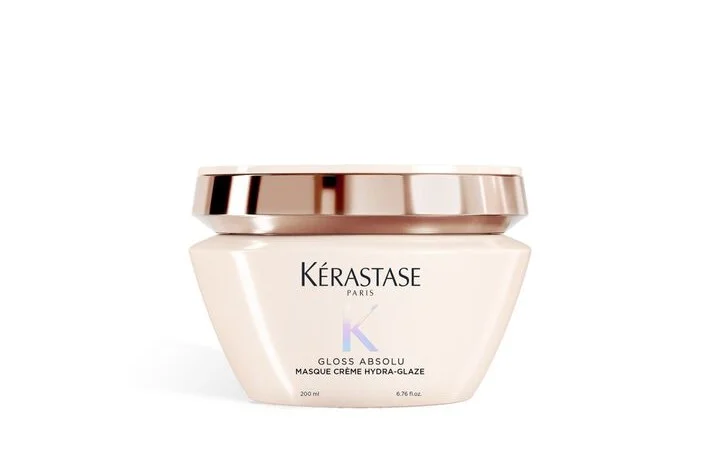
If your primary complaint is dullness and surface frizz rather than serious structural damage, the Gloss Absolu mask by Kérastase is a more targeted fix. Think of it as glass-hair treatment in a jar.
Its Hydra-Glaze technology works on the cuticle layer specifically, smoothing (making the surface flat), sealing (closing the outer layer), and reflecting light evenly so hair looks luminous. Humidity resistance is built into the formula, meaning it helps block water from the air that causes frizz, making it particularly useful for anyone living in a climate that turns hair into a frizz cloud by midday.
What works well: The shine payoff is exceptional, noticeably glossy after just one use. It's lightweight enough for fine hair, and humidity resistance keeps frizz at bay throughout the day. The formula absorbs quickly with no heavy residue.
Where it falls short: It's less effective on deeply porous or very damaged hair since the hydration works more on the surface cuticle than deep within the cortex. It's also not a strong standalone treatment if your damage is severe. Results do fade faster if you skip regular use.
3. Genesis Reconstructing Anti-Hair-Fall Mask
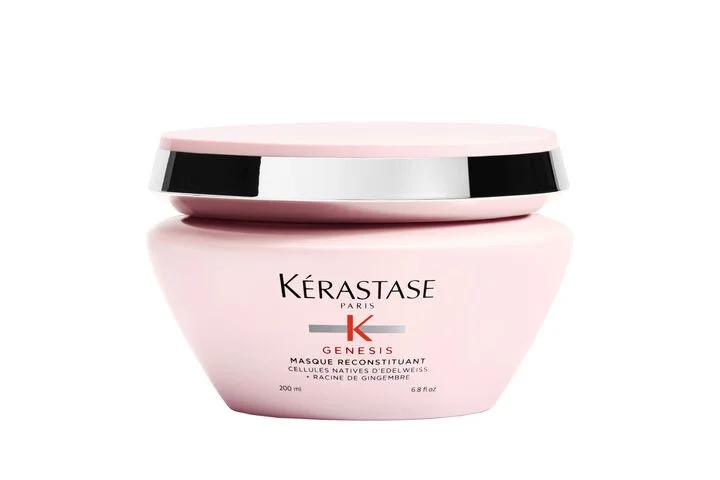
Hair that's dry and frizzy is often hair that's also weak. The Genesis mask from Kérastase addresses that root issue, quite literally. It strengthens the hair fiber from the inside while soothing the scalp to create a healthier environment for growth.
- Strengthening benefits: Glutamic acid (an amino acid, which is a building block of proteins) reinforces the cortex (inner layer of hair), improving resistance to mechanical stress like brushing and styling.
- Reducing breakage: Clinical studies on the Genesis line show a measurable reduction in hair fall during washing after four weeks of consistent use.
- Improving scalp health: Ginger root extract has anti-inflammatory properties (helps reduce irritation or redness) that calm irritation and support a balanced scalp microbiome the mix of healthy bacteria and other microbes on your scalp, which is the foundation of healthy hair production.
The standout benefits are real: breakage and hair fall reduce noticeably, fiber strength improves over time, and it's gentle enough for sensitive scalps. It also pairs beautifully with the Genesis serum for a complete strengthening system.
The trade-offs to keep in mind: this is more scalp-focused than a dedicated frizz mask. The full strengthening effect takes three to four weeks of consistent use, and if your hair is very tangled, you may want a mask with more slip alongside it.
How to Use a Hair Mask Properly for Maximum Results
The product is only half the equation. How you apply it determines how much of that formula actually makes it into your hair shaft.
- Shampoo first. Always apply a mask to clean hair, as product buildup creates a barrier that blocks penetration.
- Towel-dry gently. Remove excess water so the mask doesn't get diluted, but don't dry completely. Damp hair (hair that is not dripping wet or fully dry) absorbs ingredients more efficiently than dry hair.
- Apply from mid-lengths to ends. The scalp produces its own oils; loading a mask directly onto roots often leads to buildup and greasiness.
- Distribute with a wide-tooth comb. This ensures even coverage and starts the detangling process (removing knots) while the formula softens strands.
- Leave it in. At a minimum, 5 minutes. For severely dry or damaged hair, 15 to 20 minutes, or overnight with a silk cap if the formula is designed for extended leave-in use.
- Rinse with cool water. Cooler water seals the cuticle, locking in everything the mask just deposited.
For an extra boost between mask treatments, pairing your routine with the right oils makes a significant difference, so check out the best hair oils for dry hair to find options that complement your masking routine.
Common Haircare Mistakes That Cause Frizz
Even the best hair mask can't outwork a routine full of habits that cause frizz in the first place. These are the most common offenders, all of which are fixable:
- Overwashing: Shampooing daily strips natural sebum and disrupts the scalp's oil balance, leaving hair dry and reactive to humidity. For most hair types, 2–3 times per week is sufficient.
- Using too much heat: Heat styling above 230°C (450°F) causes irreversible protein denaturation (permanent damage to hair's structure) in the hair shaft. If you need heat, use a quality protectant every single time, no exceptions.
- Skipping deep conditioning: Surface conditioner isn't enough if your hair is genuinely dry or damaged. A mask once or twice a week is the difference between managing frizz and actually fixing it.
FAQ's
How often should you use a hair mask for frizzy hair?
For most people dealing with dry, frizzy hair, once or twice a week is the sweet spot. If your hair is extremely damaged or has very high porosity, you can mask twice weekly without issue. If your hair tends toward oiliness at the roots, stick to once a week and focus the product on mid-lengths to ends.
Can a hair mask repair damaged hair?
Hair masks can absolutely improve the condition of damaged hair. They fill in structural gaps along the shaft, restore moisture balance, and improve elasticity with consistent use. That said, truly severed bonds from bleaching or severe heat damage require protein treatments or bond-builders like Olaplex alongside a masking routine. A mask works best as part of a comprehensive repair protocol, not a standalone miracle cure.
What ingredients are best for frizz control?
Look for hyaluronic acid for deep hydration, argan or marula oil for cuticle sealing, keratin for structural repair, and glycerin or panthenol as humectants that keep moisture levels stable throughout the day. Avoid masks with heavy mineral oil or petrolatum if your hair is fine, as these tend to coat rather than penetrate, leaving hair looking greasy without delivering real hydration.
Is it okay to leave a hair mask in overnight?
Some formulas are specifically designed for extended wear, including the Genesis and Chronologiste lines, for example, can be left in for 20+ minutes safely. Overnight masking is fine with lightweight formulas if you wear a silk or satin sleep cap. However, very heavy cream masks left on too long can cause hygral fatigue in some hair types, where the fiber swells from excessive moisture absorption. Check the product instructions and start with the recommended time before experimenting.
Start Your Frizz-Free Journey Today
Here's the honest truth: dry, frizzy hair is almost always a hydration and care issue, and both are completely fixable with the right routine. A targeted hair mask, used consistently, can change the entire texture and feel of your hair within weeks.
Whether you go for the deep repair of the Chronologiste, the mirror-like gloss of the Gloss Absolu, or the strengthening power of the Genesis mask, the key is committing to the habit. Mask once or twice a week, apply it correctly, and give your hair the nourishment it's been asking for.
Your hair deserves better than a rushed two-minute conditioning rinse. Give it 15 minutes and the right formula. Watch it transform.
Share:

Stephanie Moore
Stephanie Moore is a Content Editor at Woman With Us with 5+ years of experience in fashion, beauty, and lifestyle content. She edits and refines blogs to make them clear, engaging, and helpful for readers.
Reviews
No reviews yet!