Best Hair Mask Dry Hair Actually Needs
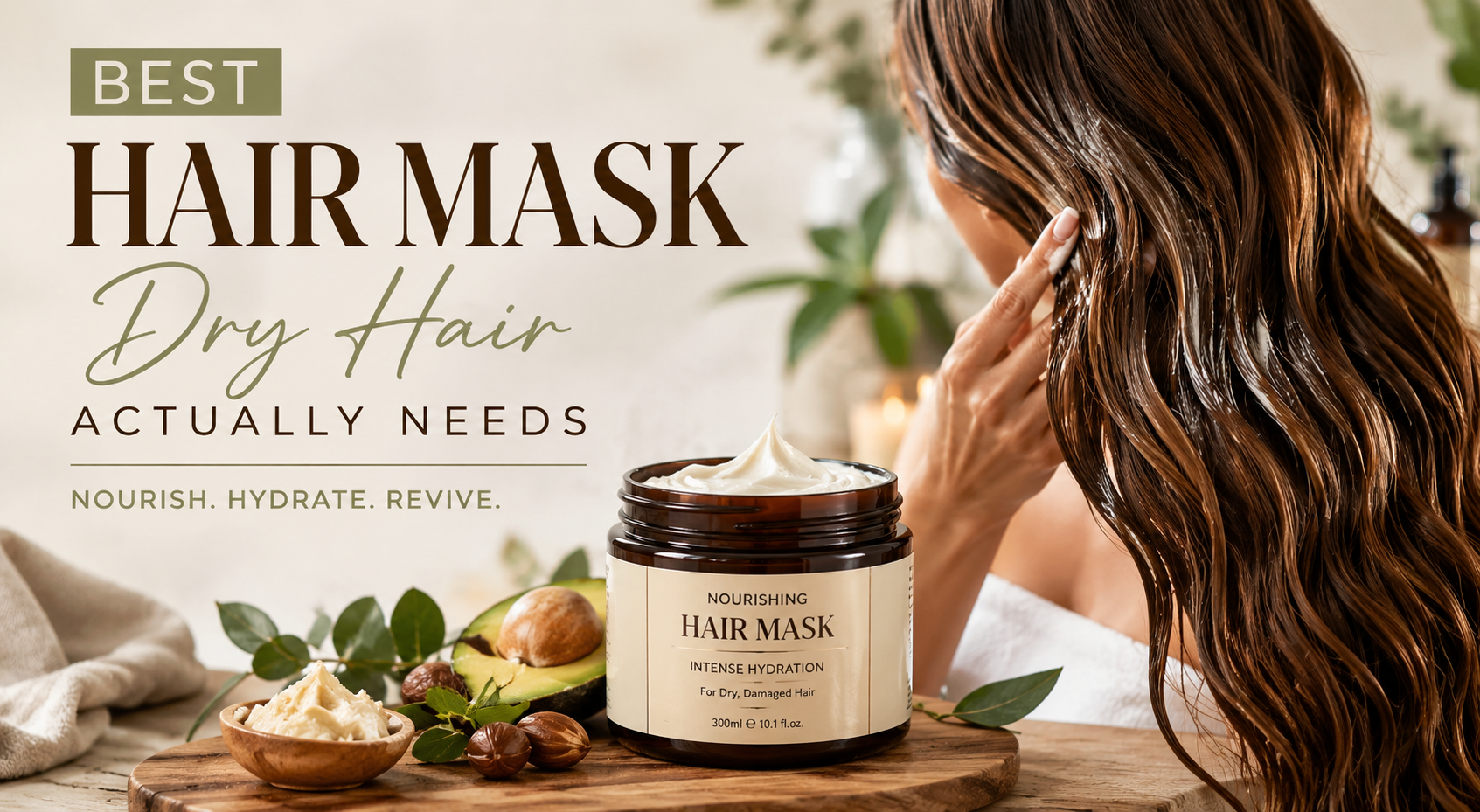
Dry hair often looks dull and feels rough, no matter how many products you layer on top.Finding the best hair mask dry hair genuinely responds to means understanding what your strands actually need to recover.The right formula can restore softness and shine within just a few uses.So, let us break down exactly what makes a hair mask effective for dry hair.
Why Regular Conditioner Often Falls Short
Daily conditioner offers quick, surface-level hydration, which works fine for mildly dry hair. However, more significant dryness usually requires deeper, more intensive treatment.
Regular conditioner typically does not stay on the hair long enough to fully penetrate the strand.Additionally, its lighter formula may not contain enough concentrated moisture for severely dry hair.Therefore, a dedicated hair mask becomes necessary once basic conditioning stops delivering noticeable results.
What Causes Hair To Become Dry
Understanding the root cause of dryness helps you choose a more effective treatment. Dry hair usually results from a damaged or compromised outer cuticle layer.
Heat styling, chemical treatments, and sun exposure all strip moisture from the hair over time.Additionally, environmental factors, like dry climates or frequent washing, can worsen the problem further.Consequently, choosing a hair mask that addresses this cuticle damage directly leads to better long-term results.
Ingredients That Deliver Real Hydration
Certain ingredients consistently stand out for treating dry hair effectively. Knowing what to look for on the label makes shopping much easier.
Shea butter remains one of the most reliable ingredients for deep, lasting moisture.It coats the hair shaft, sealing in hydration while smoothing the outer surface.Furthermore, argan oil penetrates more deeply, nourishing hair from within rather than sitting only on top.
Hyaluronic acid has also become a popular addition, since it draws moisture directly into the strands.Beyond that, ceramides help rebuild the hair's natural barrier, reducing future moisture loss.Overall, formulas combining several of these ingredients tend to deliver the most noticeable improvement.
Choosing Between Rinse-Out And Leave-In Masks
Hair masks come in different formats, and understanding the difference helps you choose correctly. Each type suits different levels of dryness and different routines.
Rinse-out masks typically offer more intensive treatment, since they contain higher concentrations of active ingredients.These formulas work well for weekly deep conditioning sessions focused on repair.Consequently, they tend to be the better choice for moderate to severely dry hair.
Leave-in masks provide lighter, ongoing hydration throughout the day or overnight.They work well as a maintenance step between more intensive treatments.Fortunately, using both types together often creates a more complete approach to managing dry hair.
How Often You Should Use A Hair Mask
Frequency plays a significant role in how quickly you notice improvement. Using a mask too rarely means your hair never gets consistent support.
For moderately dry hair, using a mask once a week typically works well for maintenance.However, more severely dry hair may benefit from two to three applications per week during the initial repair phase.As a result, adjusting frequency based on your hair's current condition often produces better results than following a fixed schedule.
Once your hair starts feeling noticeably softer, you can reduce frequency to avoid over-conditioning.Too much product, even a great formula, can sometimes leave hair feeling weighed down.Therefore, paying attention to how your hair responds helps fine-tune your routine over time.
Application Tips For Better Results
How you apply a hair mask significantly affects its overall effectiveness. Starting with clean, damp hair allows for better absorption than applying to fully dry strands.
Focus most of the product on your mid-lengths and ends, since these areas are typically the driest.Avoid applying heavy amounts directly to your scalp to prevent unnecessary buildup.Moreover, using a wide-tooth comb helps distribute the product evenly through every section.
Adding gentle heat, either through a warm towel or shower cap, can boost absorption considerably.This process helps the hair cuticle open slightly, allowing deeper penetration of moisturizing ingredients.Fortunately, this small step often makes a noticeable difference in overall softness.
Final Thoughts
Finding the best hair mask dry hair truly needs comes down to selecting rich, hydrating ingredients and applying them consistently.Focus on formulas containing shea butter, argan oil, or hyaluronic acid for the most noticeable results.Finally, adjust frequency based on how your hair responds and pair your routine with proper application technique. With the right mask, softer, healthier-looking hair is well within reach.
Share:

Stephanie Moore
Stephanie Moore is a Content Editor at Woman With Us with 5+ years of experience in fashion, beauty, and lifestyle content. She edits and refines blogs to make them clear, engaging, and helpful for readers.
Reviews
No reviews yet!