Best Face Exfoliant: How to Choose One That Fits Your Skin
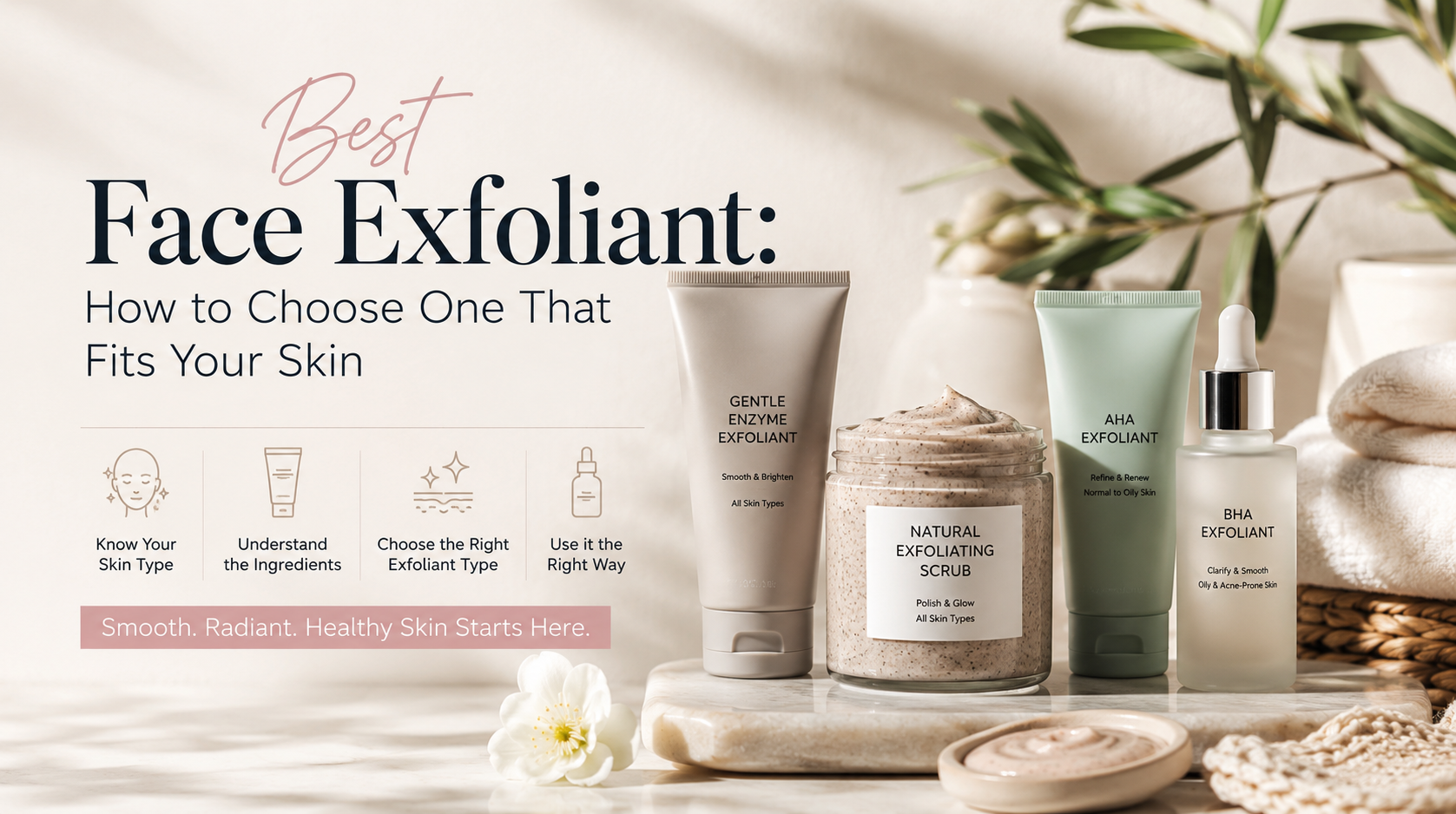
Walking through the skincare aisle can feel overwhelming when every product claims to be the best face exfoliant available.However, the right choice really depends on your skin type, concerns, and current routine.Once you understand the different options, picking the right one becomes much simpler.So, let us break down exactly what to look for.
Why Exfoliation Matters For Healthy Skin
Skin naturally sheds dead cells, but this process slows down as you get older. As a result, dead skin can build up and leave your complexion looking dull or uneven.
Regular exfoliation helps reveal fresher, smoother skin underneath.Additionally, it allows other skincare products, like serums and moisturizers, to absorb more effectively.Therefore, choosing the right exfoliant can genuinely improve the results of your entire routine.
Physical vs Chemical Exfoliants
Understanding the two main categories helps narrow down what will actually work for your skin. Each type works differently and suits different skin concerns.
Physical exfoliants use small particles or textured tools to manually remove dead skin.These options can work well for tougher, more resilient skin types.However, they can feel too harsh for sensitive or easily irritated complexions.
Chemical exfoliants dissolve dead skin cells using acids or enzymes instead.Furthermore, these formulas often deliver more even results with less physical friction involved.Consequently, many dermatologists now recommend chemical exfoliants over physical scrubs for most skin types.
Best Ingredients For Different Skin Concerns
Not every exfoliating ingredient works the same way, so matching it to your concern matters. Choosing correctly can make a noticeable difference in your results.
Glycolic acid works well for those wanting brighter, more even-toned skin.It penetrates deeply and encourages faster cell turnover.Beyond that, salicylic acid remains a top choice for oily or acne-prone skin, since it clears pores from within.
Lactic acid suits drier or more sensitive skin types especially well.It exfoliates gently while also drawing moisture into the skin.Similarly, enzyme-based exfoliants offer a soothing option for those who find acids too intense.
How To Choose Based On Your Skin Type
Your skin type plays a major role in determining the best face exfoliant for your routine. What works beautifully for one person might irritate another entirely.
Oily and acne-prone skin generally tolerates stronger exfoliants, like salicylic or glycolic acid, quite well.Meanwhile, dry or sensitive skin usually does better with lactic acid or gentle enzyme formulas.Overall, starting mild and adjusting based on your skin's response is always the safer approach.
Combination skin often benefits from a balanced formula or targeted exfoliation in specific areas.For example, focusing stronger products on the T-zone while using milder options elsewhere can work well.Fortunately, many brands now offer formulas designed specifically for combination skin types.
How Often You Should Exfoliate
Frequency depends heavily on the strength of your chosen exfoliant. Overdoing it, even with a great product, can lead to irritation or a compromised skin barrier.
Stronger acids like glycolic acid typically work best two to three times per week.Gentler options, such as lactic acid or enzymes, can often be used more frequently.As a result, always follow product instructions and adjust based on how your skin responds.
Follow every exfoliation session with proper hydration and sun protection.Exfoliated skin becomes more sensitive to sun exposure temporarily.Moreover, skipping SPF afterward can undo much of the benefit you just gained.
Final Thoughts
Finding the best face exfoliant comes down to matching the formula to your skin type and specific concerns.Focus on ingredients like glycolic, salicylic, or lactic acid depending on what your skin actually needs.Finally, always pair exfoliation with proper hydration and sun protection for the best long-term results.With the right approach, smoother, healthier-looking skin is well within reach.
Share:

Stephanie Moore
Stephanie Moore is a Content Editor at Woman With Us with 5+ years of experience in fashion, beauty, and lifestyle content. She edits and refines blogs to make them clear, engaging, and helpful for readers.
Reviews
No reviews yet!