Best Concealer Dark Circles: How To Actually Brighten Under-Eyes
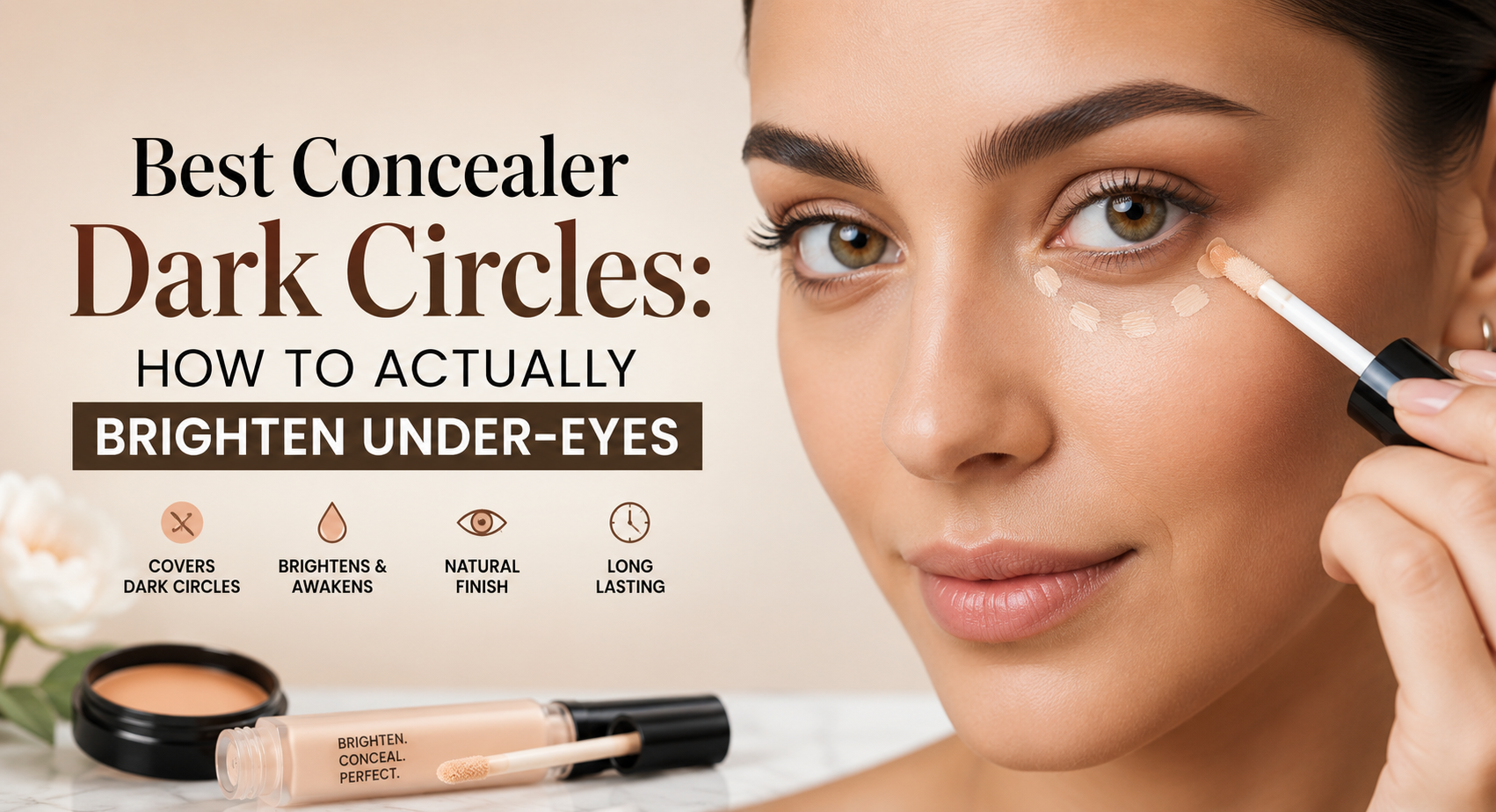
Dark circles have a way of making you look tired even when you feel completely fine.Finding the best concealer dark circles solution, though, comes down to more than just picking a random product off the shelf.Once you understand undertones, formulas, and application, brighter under-eyes become much easier to achieve.So, let us break down exactly what works.
Understand Your Dark Circle Undertone First
Not all dark circles look the same, and that matters more than most people realize. Some circles lean blue or purple, while others appear more brown or shadowy.
Blue and purple undertones usually come from thin skin and visible blood vessels underneath. Additionally, brown undertones often relate to pigmentation rather than shadowing. Therefore, identifying your undertone helps you choose the right corrector before concealer even comes into play.
Color Correction Can Change Everything
Color correctors work by neutralizing unwanted tones before concealer goes on top. This extra step often makes the biggest visible difference for stubborn dark circles.
Peach or salmon-toned correctors work best for lighter skin tones with blue undertones.Meanwhile, deeper orange or red-toned correctors suit medium to deep skin tones more effectively.Beyond that, apply correctors in a thin layer, since a little product goes a long way.
Skip this step if your circles lean brown rather than blue or purple.In that case, a concealer shade slightly lighter than your skin tone may be enough on its own.Either way, testing both approaches helps you find what actually brightens your under-eyes.
Choose The Right Concealer Formula
The best concealer dark circles routine depends heavily on formula choice, not just brand name. Creamy, hydrating concealers generally work best for covering darkness without looking dry or cakey.
Look for medium-to-full coverage formulas, since sheer concealers often cannot hide deeper discoloration.Furthermore, a slightly brightening or radiant finish tends to look more natural than a flat matte one.That said, oily skin types should lean toward lighter, semi-matte formulas to avoid creasing later.
Shade selection matters just as much as formula type.Choosing a concealer one shade lighter than your foundation adds natural brightness.Consequently, this small adjustment makes a noticeable difference in overall freshness.
Apply With The Right Technique
Application technique plays a huge role in how natural and long-lasting your concealer looks. A triangle shape under the eyes works better than a small, isolated dot.
This technique covers the entire darkened area, including the inner corners where shadows often concentrate.Additionally, it helps blend seamlessly into your foundation for a more lifted appearance.Use a damp sponge or soft brush to pat, rather than rub, the product into place.
Patting instead of rubbing prevents disturbing the concealer or moving it out of position. Moreover, this method distributes product more evenly across delicate under-eye skin. Overall, gentle application leads to smoother, more natural-looking coverage.
Set It To Prevent Creasing
Setting powder is essential for keeping concealer in place throughout the day. Skipping this step often leads to fading or creasing within just a few hours.
Use a small amount of translucent powder and press it gently under the eyes.A fluffy brush works better here than a sponge, since it deposits less product.Fortunately, this technique locks concealer in place without adding extra texture or heaviness.
If your skin leans dry, use setting powder sparingly to avoid emphasizing fine lines.Instead, focus more product on oilier areas that tend to crease first.As a result, your concealer stays smooth and natural throughout the day.
Final Thoughts
Achieving the best concealer dark circles results comes down to understanding your undertone, choosing the right formula, and applying it correctly.Focus on proper color correction, suitable coverage, and careful setting for the most natural finish.Finally, always test a new concealer in daylight before relying on it for an important day.With the right approach, brighter, more awake-looking eyes are easier to achieve than you might think.
Share:

Stephanie Moore
Stephanie Moore is a Content Editor at Woman With Us with 5+ years of experience in fashion, beauty, and lifestyle content. She edits and refines blogs to make them clear, engaging, and helpful for readers.
Reviews
No reviews yet!